

You could easily make the case that if 2025 has been defined by anything, it’s AI agents. The 433 deals for AI agent startups this year means the sector is by far and away the one that’s seen the most activity in the last 12 months, according to Sifted data. Next up is medtech with 324 deals.
AI agent startups that have raised this year are working on everything from cybersecurity and supply chain to customer service and sales, and the traction in the sector indicates that companies aren’t just playing around with the technology anymore, they’re integrating it into their workflows and expecting tangible ROI.
That was one of the main takeaways from our latest Sifted Talks, where we asked our panel of experts for the trends that defined their year, how they’ve been using AI and keeping up with the pace of development and what lessons from 2025 they’re taking into the new year.
We were joined by:
- Sam Crisp, lead technology strategist at intelligent content management platform Box
- Aron Gelbard, cofounder and CEO of online florist Bloom & Wild
- Sabrina Castiglione, chief financial officer at AI-powered procurement platform Omnea
- Dinika Mahtani, partner at VC firm Cherry Ventures
Here are the key takeaways:
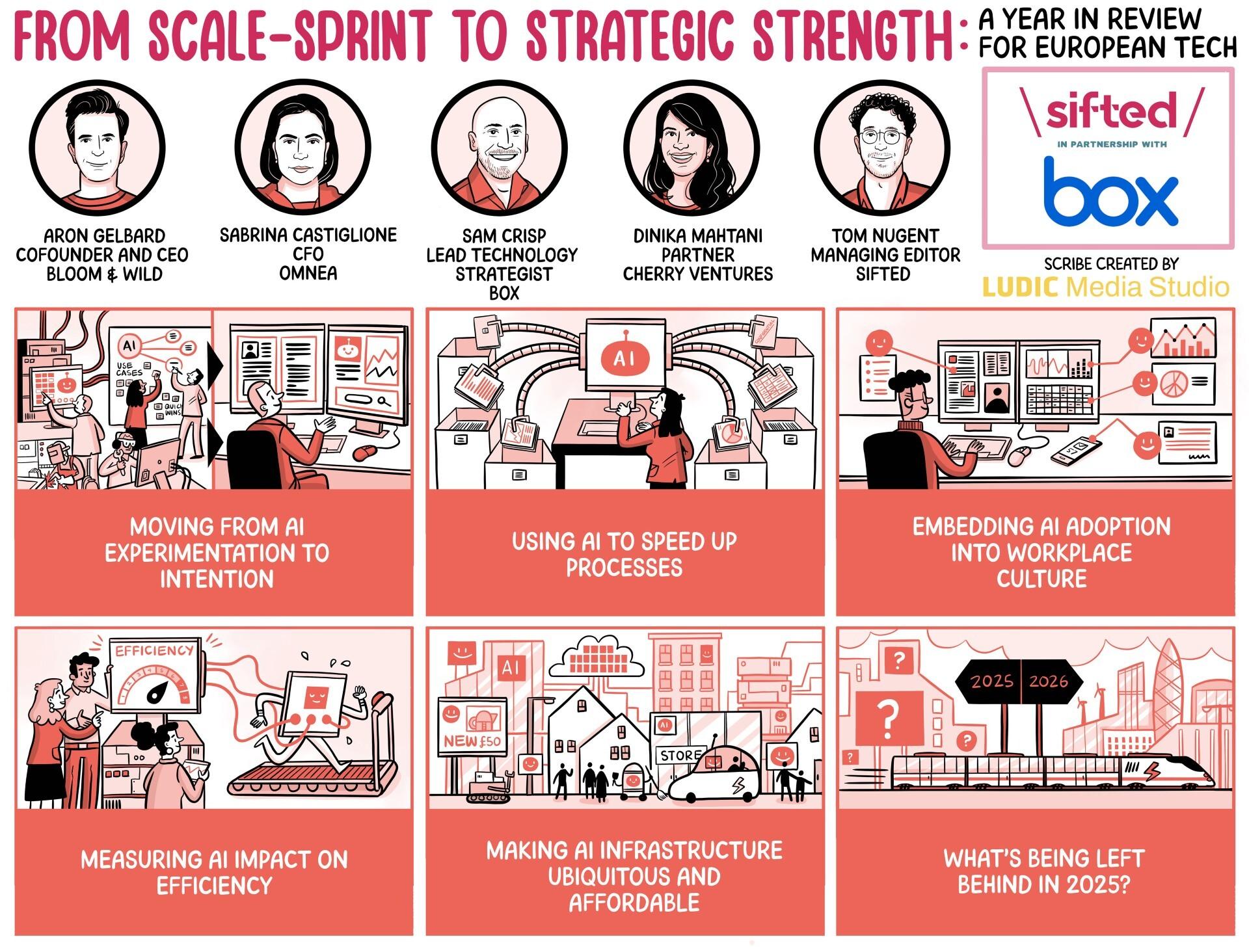
Moving from AI experimentation to intention
For Crisp, the main difference at Box this year is the company’s move from experimenting with AI to using it with intention.
“We've moved a lot from getting the team to experiment and go wild to looking at ways in which they can make use of the technology and bring useful stuff back to us at an intentional pace,” he says.
Crisp says there’s clear focus at Box on how to use AI in a way that aligns with business outcomes and to make sure everyone at the company is getting the most out of it.
“Our CEO is forward thinking about the fact that we have always wanted to come from experimentation to strategy and getting that executive alignment down has been front of our mind.”
Castiglione adds: “There was that phase of everyone experimenting. But you want to automate the highest value opportunities in your business.”
“For us this looks like getting our data in really good shape and making sure that the foundations are there for AI to actually be effective.” - Castiglione
Embedding AI adoption into culture
Ensuring all employees are onboard requires a culture shift, according to Gelbard. In order to avoid scepticism, Bloom & Wild has been supporting its workers in learning how to use AI tools and building their confidence in doing so.
Gelbard says: “AI is part of modern work like when people learnt to use Google 25 years ago. We're now in a world of people who understand that this is mainstream.
“You have to segment your teams into the leading edge people who are playing around with AI, the people who are happy to go along with the mainstream and then the people who are less confident in it.”
Employees at Bloom & Wild have created channels to support others in adopting AI and the company has slowly seen a rise in the number of employees who are confident using the tools.
Introducing change into workforces can be difficult though, especially when it comes to new technology tools, Crisp adds.
“More senior people are sometimes, not always, at the back end of the change.”
“Saying that we're exploring this to support you and ensuring everyone is doing that in a way that makes sense to them is really important.” - Crisp
Making AI infrastructure ubiquitous
From an investor’s point of view, Mahtani hopes to see more investment opportunities into startups working on AI infrastructure.
The market is currently largely focused on AI applications, she says, adding she doesn’t believe Europe yet has “the right ingredients to make the usage of AI models, applications and agents ubiquitous.”
Areas that need more investment include AI hardware, cloud platforms, ML frameworks and high-speed networking.
This was the year that countries did start to take action on this. The UK government is currently working to improve the country’s AI infrastructure with money going into so-called AI growth zones. Up to £100bn in funding will contribute to faster planning permissions, enhanced grid access and power solutions to build data centres.
Mahtani also hopes to see agentic AI rails improving in the next few years. “Right now the rails for adopting agents within enterprise scaleups are not there yet. There are still real gaps within the ability for agents to do meaningful tasks in the way that humans do.”
“We are very excited to spend a lot more time in this space and make new investments in 2026.” - Mahtani
What should we leave behind in 2025?
Unfocused efforts when it comes to using AI is one thing Castiglione is leaving behind in 2025.
When there is such a wide variety of AI outcomes, she emphasises that users need to be “deeply questioning what problems they are trying to solve and which of those problems is more important.”
Mahtani says she’s leaving behind typing in exchange for alternative communication methods in 2025. AI tools are a useful way to draft emails with voice, she says, something she’s started trying.
Using AI for “dumb work” is something that Crisp hopes Box employees will be moving away from in 2026. "We're starting to get more cultural development around what is acceptable around AI usage and how we're driving value,” he says.
And as for Gelbard? Scepticism is a thing of the past. “We’ve moved beyond it. At the start of this year scepticism was more acceptable.
“Now AI is transforming how we work every day.” - Gelbard