The way tech companies across Europe hire has been shaken up in 2025. Competition for talent has made salaries soar, demand for new roles such as GTM engineers has intensified and a switch up in workforces to prioritise lean teams has added to the changes faced by startups.
Next year is set to bring its own shifts. Felix Steffens is CEO of Berlin-based Employer of Record (EOR) WorkMotion, which manages the legal, HR, tax and local compliance responsibilities of a company’s talent in any country where a business doesn’t have its own legal entity.
He has identified five key trends that will impact workforces next year: an intensifying shortage of talent, AI reshaping rather than reducing job demand, longer times to fill open roles, the soaring cost of living in major cities and employees’ growing insistence on flexibility.
“The biggest trend overall is the demographic shift, but tech workforces are actually impacted the most by the way AI is shifting the dynamic of the job landscape today,” says Steffens.
“There's a much higher demand for specialised workforces, so there's less demand for roles that are more commoditised like customer support and sales development representatives. We’re already seeing the first models of AI replacements for these roles.”
Talent
In many cases, AI isn’t simply replacing jobs — it’s changing them. Employers consider AI fluency as a core skill, with 90% of employees expected to have fluency in the technology by 2030. This means 59% of workers will require up- or re-skilling in the next five years, according to The Future of Jobs Report 2025.
This, paired with the shortage of available talent, is a much-discussed ongoing problem. Steffens says with “baby boomers” exiting the workforce, the demographic shift is leaving gaping holes in the talent pool. Countries such as Germany and Japan are already affected, but Steffens predicts a global shift in the coming years.
If you fill roles very slowly, it means you're missing out on growth and that means you're missing out on creating shareholder value.
“Right now, you can still find a lot of highly educated and available talent in southern Europe in Spain, Italy and Greece, but even those countries will struggle with the shortage of talent 10 years from now,” he says.
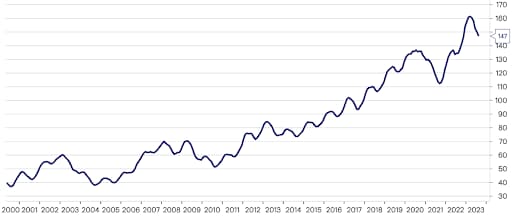
Felix also says an increase in the time it’s taking to hire is another notable trend. It now takes 147 days to hire a skilled worker in Germany, for example, double the time it took 10 years ago; in 2000 it took around 40 days. People often are aware of increasing time to fill an open role, but they don't make this connection to the economic impact. WorkMotion is currently hiring for different remote roles, especially in sales, and Felix needs these roles to be filled quickly, as that “ultimately translates into growth.”
“If you fill roles very slowly, it means you're missing out on growth and that means you're missing out on creating shareholder value,” he says.
There could be one obvious solution to that: hire remotely in other countries and by that broadening your available talent pool. Felix says discussion that all teams are returning to the office is wide of the mark, and he hasn’t seen this; he says in recent years there hasn't been a real change in such practice.
There is a lot of brilliant talent out there in the world that might not just be around the corner, you might have to look beyond borders.
“There was a time when people were called back to the office, but the level of remote work as opposed to in office work has been constant over the last two years,” he says.
Founders should be open to hiring for remote employees outside their local talent pool, especially for more specialised roles such as AI engineers, which are more in demand than ever and the hardest to find.
“Remote work isn't a perk — it's a requirement to stay competitive,” he says. “If you're hiring globally and remotely, you're able to fill roles much faster, and this has real business impact.
“There is a lot of brilliant talent out there in the world that might not just be around the corner, you might have to look beyond borders in countries where you wouldn’t normally hire.
Source: German Federal Employment Agency, Fachkraft Engpassanalyse; Stepstone
“You can lower the average salary by not restricting yourself to a local talent pool too. We have hired very strong AI engineers remotely in Egypt, for example, and that works because there is strong talent in this field out there.”
But Steffens notes that remote working isn’t about low-cost outsourcing — it’s to find top talent in leadership and expert level roles. He says that instead of bringing people to the jobs via immigration, founders should bring jobs to the people.
“That's effectively what WorkMotion does as an Employer of Record,” he says, “we enable companies to hire employees where they are in the country where they live. We take care of all the compliance and making the connection.”
Employees want flexibility
Employees are demanding the flexibility of remote work too. Only one in 10 Gen Z workers wants to work full-time in an office, with freedom of location for working deemed a priority.
This is further exacerbated by the skyrocketing cost of living in big cities, another key trend noted by Steffens. Take the Netherlands, for example: home prices across the country have doubled over the past 20 years, but in Amsterdam, they have tripled. On top of this, average wages have been stagnant during the same period.
Urban areas are becoming increasingly expensive, meaning some of the best talent can’t afford to live close to offices in the city centre.
If you're able to shift your mindset, set clear goals for teams, look at the output and reward people based on this output, then remote work is such an easy thing to execute.
With all this in mind, Steffens says remote hiring just makes sense. For leaders who struggle to manage remote employees, he recommends measuring output rather than the hours workers sit at their desks.
“If you're not able to set clear output goals to your employees, that's not a problem of remote work – that's a problem of your leadership style,” he adds. “If you're able to shift your mindset, set clear goals for teams, look at the output and reward people based on this output, then remote work is such an easy thing to execute.”
Steffens' advice to founders unsure whether to hire remote workers from across borders? Just give it a go.
“If you're looking to fill a sales role, put up a job ad online that’s local and put up another that’s remote to compare — you will see how many more high quality candidates you get for the remote listing.”