Scots have a historical reputation for developing leading inventions, from the steam engine to the discovery of penicillin.
But despite the country's ability to produce brilliant research ideas, scaling those ventures through the growth stage has been a more complex task.
That’s starting to change though, with a cohort of Scottish founders proving you no longer need to leave the country to build a globally ambitious company.
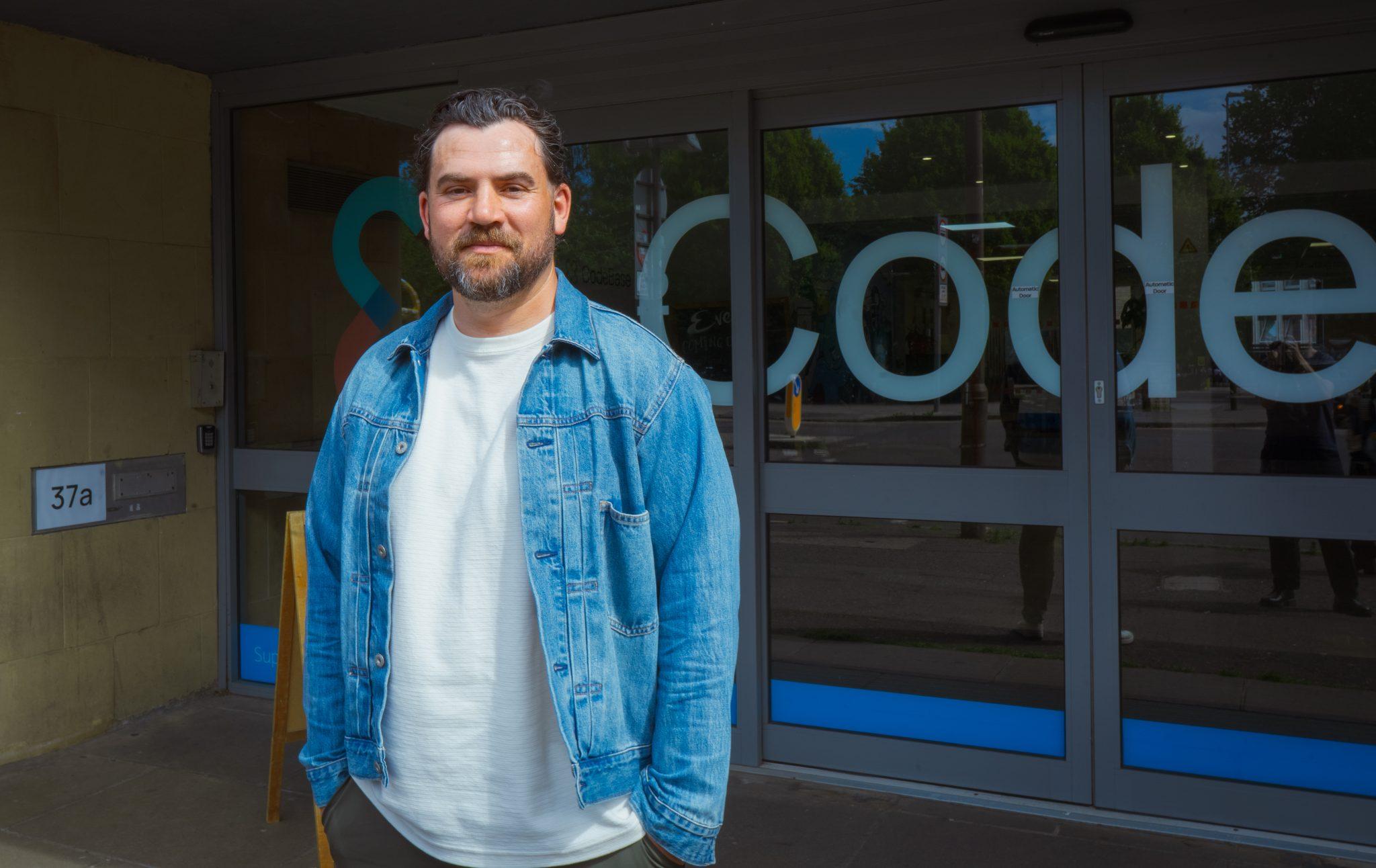
“There's some real breadth in the Scottish ecosystem in terms of the type of companies developing game-changing technology that's going to be impactful on a global scale,” says Allan Cannon, entrepreneur in residence at Scottish growth platform CodeBase.
“[Investment has] been quite significant over the last few years. It's an indication that there's a huge change happening within Scotland,” he adds.
Sifted sat down with Cannon, along with Zakareya Hussein, CEO of e-skin robotics startup Touchlab, and Dr Chelsea Jarvie, founder of AI age verification provider Neon Guard, to unpack how the Scottish AI and deeptech ecosystem has matured over the years, and the benefits that come with mentorship programmes such as Techscaler.
The Scottish ecosystem: research and ambition
Scotland’s research strength lies in solving complex and inventive problems across sectors spanning AI and computer science.
“If you look at Scotland over the last 250 to 300 years, it arguably has the most inventions in the world,” says Hussein. “Antibiotics were discovered here, modern day global economics, the steam engine.”
In the past, Scotland’s weakness was funding companies well past the seed stage. But as momentum, growth and investment builds, Scottish founders are now considering building and growing out of Scotland.
Research from the Royal Academy of Engineering shows that Edinburgh ranks as the highest city in the UK for deeptech investment outside of the Golden Triangle (Oxford, Cambridge and London).
If you look at Scotland over the last 250 to 300 years, it arguably has the most inventions in the world.
57% of Scottish VC money also went to deeptech last year, according to a report by Dealroom and the University of Glasgow. “We have a traditional industrial hardtech ecosystem within Scotland, and a strong research base,” says Cannon.
The country offers physical assets that give local startups a unique developmental edge, he adds.
“We produce world-leading science and have offshore energy infrastructure, defence ranges and industrial assets. That's where I see a lot of opportunities.”
These include wave and tide power facilities The European Marine Energy Centre (EMEC) and Offshore Renewable Energy (ORE) Catapult, as well as the Ministry of Defence (MOD) Hebrides defence range.
Bridging the ‘valley of death’
While Scotland's university networks have excelled in supporting early-stage research, navigating the funding landscape at late-stage remains an ongoing focus for founders and investors.
“We're excellent at getting ideas to the runway,” says Jarvie. “The commercialisation infrastructure has come on a lot, and universities are taking spinouts seriously. A researcher with commercial ambition today has real, clear routes forward that didn't exist as visibly before.
“The next step is making sure that support is matched with capital, especially early on. If Scotland can pair the strong support ecosystem we've built with capital that can be deployed at the scale and speed the opportunity demands, then real acceleration can happen.”
A common barrier for early-stage startups is having the knowledge to turn scientific research into commercial ventures, says Cannon. “Specifically in deeptech, a lot of founders mistake technological or product validation as market validation and thinking that's all you need to grow a business.”
The next step is making sure that support is matched with capital, especially early on.
Jarvie had to adapt the Neon Guard pitch to overcome this challenge. “I told the story and framed the technology around the people it protects rather than the techniques behind it.
“Now the research backs up the people-first story, instead of me trying to make technical research the story.”
Techscaler programme: An engine driving momentum
Programmes such as Techscaler, delivered by CodeBase on behalf of the Scottish Government, are crucial for entrepreneurs learning to translate their research into commercial businesses.
But building a successful company also requires visibility and access to the right networks. Techscaler’s Ones to Watch publication helps provide that visibility, spotlighting emerging success stories and creating opportunities for investors, partners and collaborators to engage with Scotland’s next wave of tech innovation. Jarvie and Hussein were featured in the report earlier in the year.
The publication tracks early traction, investment trends and standout innovators across verticals such as AI, deep tech, healthtech and climate tech.
Having the mentorship that comes with these programmes has been invaluable to Jarvie. “The ongoing support matters. I’m on a solo deeptech founder journey and that’s intense. Having a network I can lean on, people I can call and voice note when things are hard has helped me navigate this.”
Founders realise they are good enough to build here.
One major part of the Techscaler programme is taking founders out of their local markets and exposing them to global tech hubs.
“Techscaler got me to Silicon Valley and it completely changed the strategy for Neon Guard,” says Jarvie. “Seeing how the startup world operates outside of the UK showed me what was possible, and the connections I made there led directly to investment in the business.”
These international trips can also create a feedback loop for the Scottish ecosystem, adds Cannon. “[Giving founders] access to how other founders are building internationally translates into new processes or ways of working here in Scotland. Founders realise they are good enough to build here.”
Techscaler also provides founders with education courses, one-to-one and group mentorship, access to community networks, events and workspaces, as well as connections to investors and support with fundraising and pitching.
People here are generous with their time and willing to make introductions, so you can reach the right people surprisingly quickly.
“[They provide opportunities to] talk to the right people and make sure that if something doesn't feel right, not to close a deal,” says Hussein. “For example, with an angel investor that might not understand what you're doing or your field.”
Having technology skills alone isn’t enough if you lack the skills to sell your product or services, he adds.
Jarvie points to the collaborative nature of Scottish communities as a huge benefit to Neon Guard.
“Scotland's most underrated asset is its community. People here are generous with their time and willing to make introductions, so you can reach the right people surprisingly quickly. That's been invaluable for Neon Guard.”