
Europe's wellness sector is booming. In 2025, Europe’s mental health and wellbeing sector collectively raised €435.8m in funding, according to Sifted data. Companies like Finland's Oura (now valued at $11bn) are becoming increasingly adept at measuring health outcomes: how well you slept, whether your heart rate variability is improving, how active you've been. These are all valuable signals, but they're pieces of a larger puzzle. What's harder to see is what's determining whether someone will thrive under pressure or struggle.
UK-based WONE (Walking on Earth) believes that's the missing piece in current health and wellness tools, and is working to redefine stress as a signal that can provide actionable information about a person’s capacity and demand.
According to a WONE study of UK and US based respondents, almost half (45%) of workforces report feeling highly stressed or experiencing stress frequently or always. Yet most organisations lack the tools to understand why or what to do about it beyond generic wellness programmes.
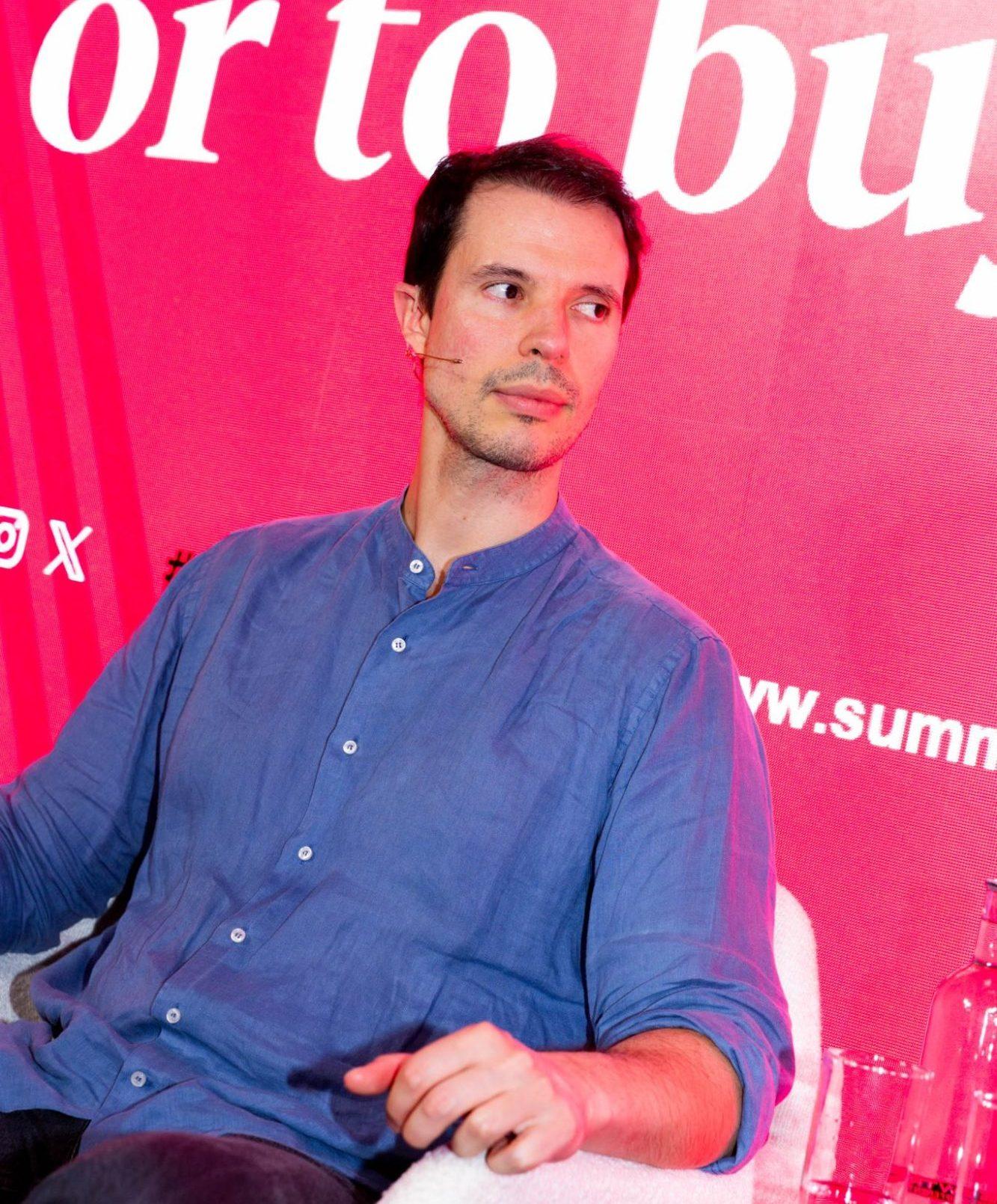
In an interview with Sifted, Dr Lydia Roos, chief science officer at WONE, explains the science behind the WONE Index, why stress measurement has been the missing piece, and how validated measures are enabling a new generation of AI-powered coaching.
The WONE Index: measuring the full system
“Stress isn’t necessarily the problem,” says Roos. “Of course there are some types of stressors that are going to be largely out of our control. But much of the stress we encounter day to day can be thought of as relatively ambiguous, requiring interpretation and response on our part to successfully manage.”
“The problem is that interpreting stress intelligently isn't a skill most people develop. We're taught to override signals until performance or health drops rather than read them and understand.”
Developing that skill requires a foundation: measurement. Yet most existing stress measures weren't designed for this purpose. Most tools were built for controlled research environments, capturing narrow snapshots rather than tracking how capacity changes over time and across contexts, adds Roos.
There really haven't been any measures before that have included this full range.
At the core of WONE's platform is the WONE Index, a scientifically validated measure that combines current stress load with the evidence-based factors that determine someone's capacity to handle it. The Index assesses both what someone is facing and the resources they have available to respond.
"When we talk about resources, we're not just talking about finances or time," Roos explains, “but scientifically validated factors that determine whether someone manages stress effectively, recovers fully, and is able to grow and thrive under pressure. There really haven't been any measures before that have included this full range.”
The WONE Index was validated through a two-phase psychometric study published in the Journal of Medical Internet Research (JMIR). Phase 1 involved 1,005 full-time employees across the US and UK, establishing the initial structure. Phase 2 refined this with 306 US adults in a longitudinal study, testing not just reliability but also measurement invariance across gender, age groups and race.
Sometimes you don't realise what's going on until you're asked a question and you reflect.
Critically, the Index demonstrated 'incremental validity’, meaning it adds predictive power beyond established measures including the Perceived Stress Scale (PSS-4), Connor-Davidson Resilience Scale (CD-RISC-10) and Brief Resilience Scale (BRS), even when those measures were combined.
The Index is designed to be taken once a month, frequent enough to track meaningful change, yet spaced enough to allow interventions to take effect. Month-to-month data reveals trajectories: what's improving, what's declining and which interventions are actually working.
"Sometimes you don't realise what's going on until you're asked a question and you reflect," Roos notes. "The act of measurement itself can create awareness."
Users then receive a comprehensive view of their results which helps them to understand not just what they're struggling with, but specifically where capacity is strong and where it's stretched.
Integrating AI into stress intelligence
Measurement alone isn’t the goal. The Index feeds directly into WONE's AI Resilience Coach, which translates validated data into personalised, actionable guidance.
"If someone has completed the Index, that gives the AI coach a really solid initial understanding of where they're starting from and what kind of levers are available," Roos explains.
Rather than existing as a standalone chat feature, WONE's AI is embedded throughout the platform. It curates personalised content based on Index results, surfaces insights by combining biometric and self-reported data along with conversations with the coach.
It’s about building future resilience and helping people develop the skills to regulate stress intelligently before it escalates.
“For example, someone might be getting good quality sleep but still feeling fatigued,” Roos explains. “That’s a signal to explore other factors such as cumulative load, cognitive strain or social stress, rather than defaulting to generic advice about sleep hygiene.
Importantly, WONE has deliberately avoided humanising its AI.
“The focus is always on helping the user, not building a relationship with the AI,” Roos says. “This isn’t about trauma work. It’s about building future resilience and helping people develop the skills to regulate stress intelligently before it escalates.”
From individual patterns to organisational intelligence
For organisations, WONE provides aggregated, anonymised insights that highlight systemic stressors and identify groups under disproportionate strain or at higher risk of burnout, enabling intervention at the organisational level.
"We recognise that there is a lot within a person's control, but there are also things that are outside of someone's control," Roos says. "When we share insights with organisations committed to employee wellbeing, they can address root causes and not just tell people to be more resilient.”
That makes the ability to adapt, recover and grow under pressure a core future skill.
This approach acknowledges a reality often missing from workplace wellness programmes: individual resilience can only compensate for so much. When the data reveals persistent patterns, such as a product team consistently under deadline pressure or a customer-facing function experiencing burnout, that's actionable intelligence for leadership, not just for HR.
As AI reshapes the workplace, Roos sees resilience skills as more critical than ever. “AI is creating additional stress, from job security concerns to pressure to deliver more impact,” she says. “That makes the ability to adapt, recover and grow under pressure a core future skill.”
WONE is positioning stress intelligence as a foundational capability for the future of work, one that enables sustained performance without ignoring the real demands people face. Access more information about the WONE Index here and to book a demo, reach out to the company here.