For years, running a startup has meant working with multiple different finance tools and applications spread across various platforms.
Finance teams used one system to send invoices, another to run payroll and a third to manage bookkeeping. But as businesses seek greater efficiency, this approach is becoming a challenge.
Startups are now leaning towards more unified financial platforms offering these services all in one place. This approach not only eliminates the headache of managing multiple software platforms, but also means that if something goes wrong, there’s only one vendor to call.
“This all-in-one integrated approach is about having the collaboration between the accountant and the startup client,” says Steffen Torp, chief commercial officer at Visma, which offers software in accounting, payroll and tax to small and medium-sized businesses.
A recent study by Visma showed that 74% of small business owners and 80% of accounting offices prefer this all-in-one accounting software approach.
“Customers are happier in general and are less likely to leave if we provide the full suite,” he adds.
In an interview with Sifted, Torp along with Karina Wellendorph, managing director of accounting and finance platform E-conomic, and Hege Oustad, managing director of accounting software provider Tripletex, unpack what is driving this shift towards all-in-one finance platforms.
The shift to all-in-one finance platforms
User feedback has played a key part in the move towards more integrated tools, says Wellendorph.
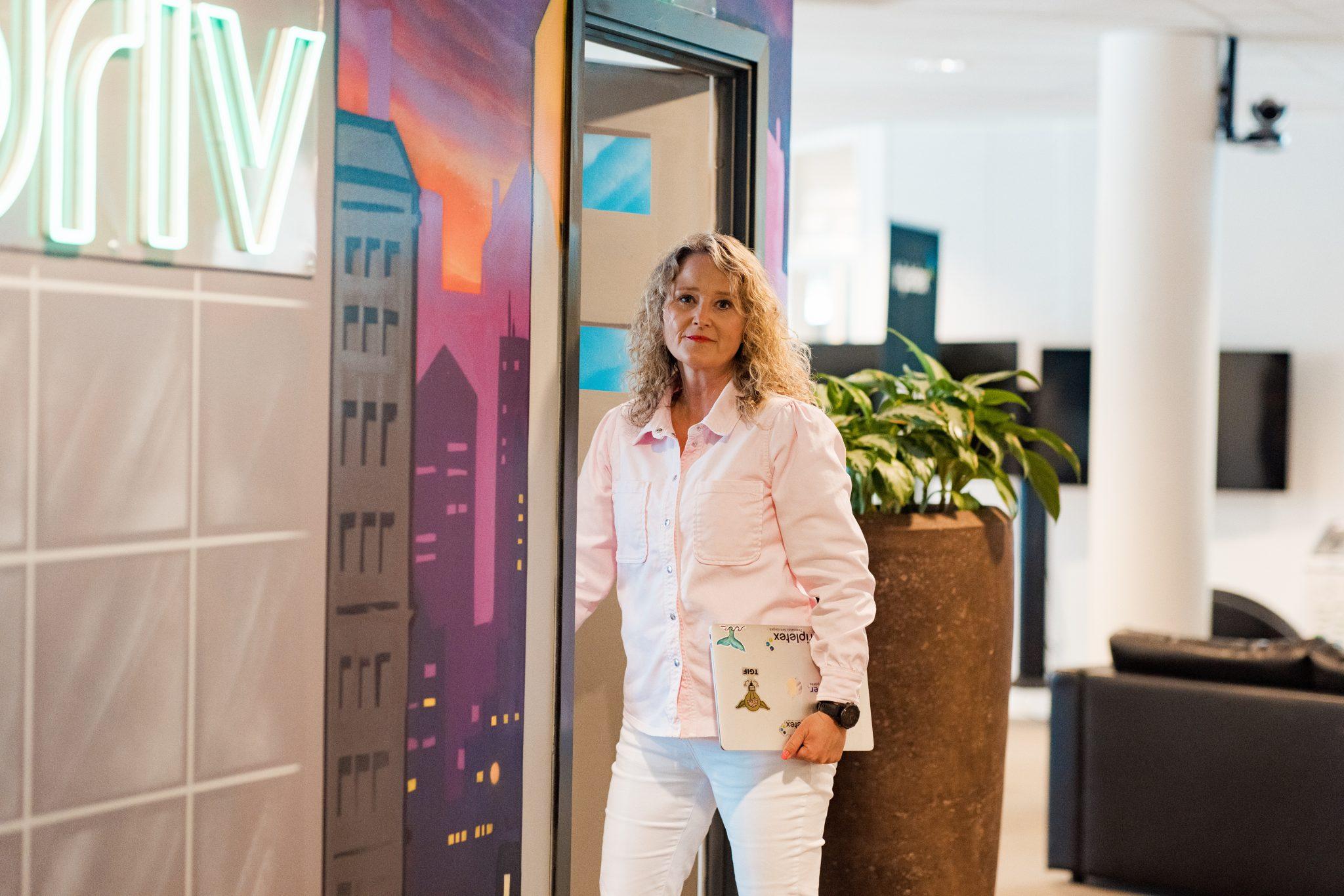
“It wasn't something that just happened,” she says. “It was a message that we kept hearing from our customers and from the market asking us to gather more things within one solution.”
The company now offers bookkeeping, accounting, payroll and invoicing services via a single platform. “Even though different systems or solutions were linked before,” she says “They wanted to have more [features] within the same system and just use one login and the same interface.”
Keeping users within a single platform also reduces time spent between finding and using separate tools, Wellendorph says. This allows businesses to be “left with more time and attention” to running and growing their business.
That's how we got ahead of some of our competitors who didn't have that all-in-one package.
Tripletex also experienced this shift early on in the company’s growth, according to Oustad.
Starting out as a tool for invoicing, the company realised that building payroll software from scratch and embedding it into its own platform made more sense, rather than relying on third-party applications using application programming interfaces (APIs) — digital bridges allowing separate software programmes to share data.
“Since you’re already doing invoicing, why not have it directly in your accounting system?” she says. “Many said we should not make a payroll system so complex but that's how we got ahead of some of our competitors who didn't have that all-in-one package.”
While convenience is a major reason for the shift towards more integrated platforms, factors such as compliance and regulation are also accelerating the change.
“The markets where Visma companies have grown the fastest over the past two years are the markets where there’s regulatory push,” Torp says.
Many governments now require businesses to process their invoices through digital channels, such as e-invoicing.
In some countries rolling out these new laws — including France, Germany and Croatia — the requirement to use digital invoices applies across the board, from large corporations to small businesses and freelancers.
A local-first strategy for global expansion
Scaling financial software into international markets can be difficult, as bookkeeping and finance regulation can vary significantly from one country to another.
Regulatory fragmentation and varying business practices has led Visma to develop a ‘local-first’ strategy. This involves expanding into new markets by acquiring local startups rather than pushing the same product across different countries.
Following the success of its Nordic portfolio companies, including Tripletex and E-conomic, the group is now expanding further across Europe and Latin America.
For Tripletex, building a locally tailored platform wasn't always the obvious choice and the team had to advocate for the approach early on.
A company that is born and developed by founders in that local market that already know those customers.
“We fought for this model from the beginning,” Oustad says about their early days joining the wider Visma group. “When we entered Visma we were very small, so we really had to fight for this way to do it.”
An advantage for Tripletex, based in Norway, was having a company like E-conomic in Denmark to learn from. The company was “inspired by E-conomic. We could see a lot of similarities [in] how we built our product and how we built the organisation,” says Oustad.
Today, Visma uses the knowledge gained from these Nordic hubs to fuel its expansion.
“When we enter a new country, we don't look at what’s the best system we have in Finland or the best system we have in Belgium and then go to a new market with that system,” says Torp.
Instead, Visma targets promising local companies built by native developers. “We look at who is already successful in that market — a company that is born and developed by founders in that local market that already know those customers,” he adds.
AI and the evolving role of finance teams
AI is rapidly changing how finance teams operate and many integrated finance platforms are automating their services.
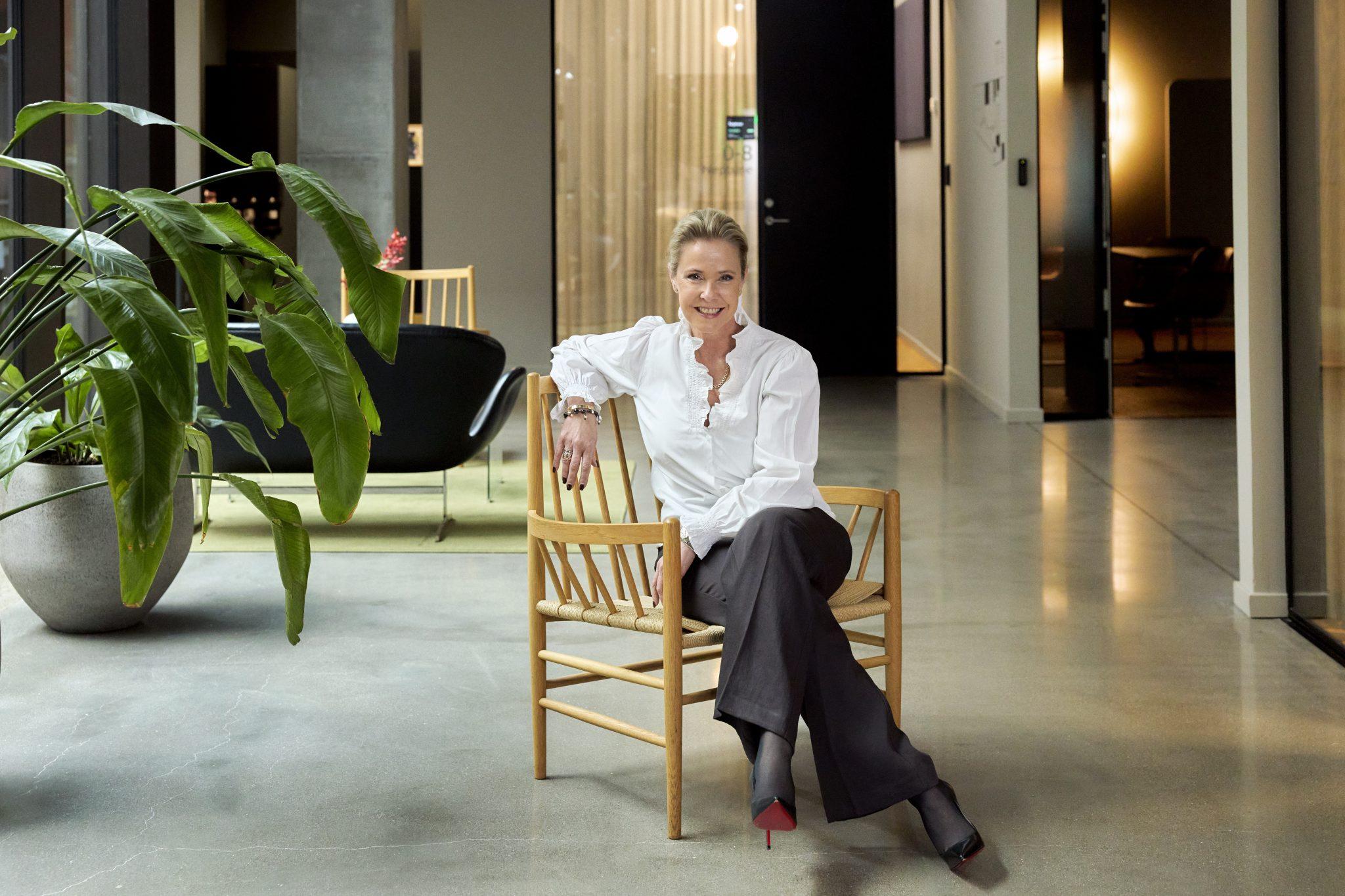
A major driver for automation is a growing talent shortage in the accounting industry. According to the 2026 Accounting Talent Index, 73% of UK accounting firms are turning away potential clients because they don’t have enough staff to do the work.
Meanwhile, research by the Chartered Accountants Benevolent Association found that 74% of accounting firms believe the workloads could push people out of the profession altogether.
“Accountants [...] globally and in the Nordics, on average get a little bit older every year. So there are more accountants retiring than [are] starting,” Torp says. “That means our systems have to be more efficient. They have to be more [of a] self-driving accounting platform. No manual work.”
The rise in automation means the role of the traditional finance officer is changing.
Instead of accounting being seen as purely data entry, Torp hopes AI will act as a ‘virtual advisor’ that prepares the day's work in advance.
“The accountant can come to work every day [and] the system is already up to date,” he adds. “They can get advice that they can give to their clients.”
The rise in automation means the role of the traditional finance officer is changing. E-conomic’s customers are actively relying on them to “lead this transition,” says Wellendorph.
Finance teams “will have more time to actually focus on the forecasting, the planning, the strategy, the different tasks that require human judgment,” she adds.
However, AI should be used as an assistant, not a replacement for financial expertise, she notes. “You can never let an AI agent be responsible for your bookkeeping and your year-end closing. It will always be up to humans to make that judgment.”