Tokyo is often seen as a dream holiday destination — but the city’s recent investments in its tech ecosystem are making it easier for founders and investors to combine business with pleasure.
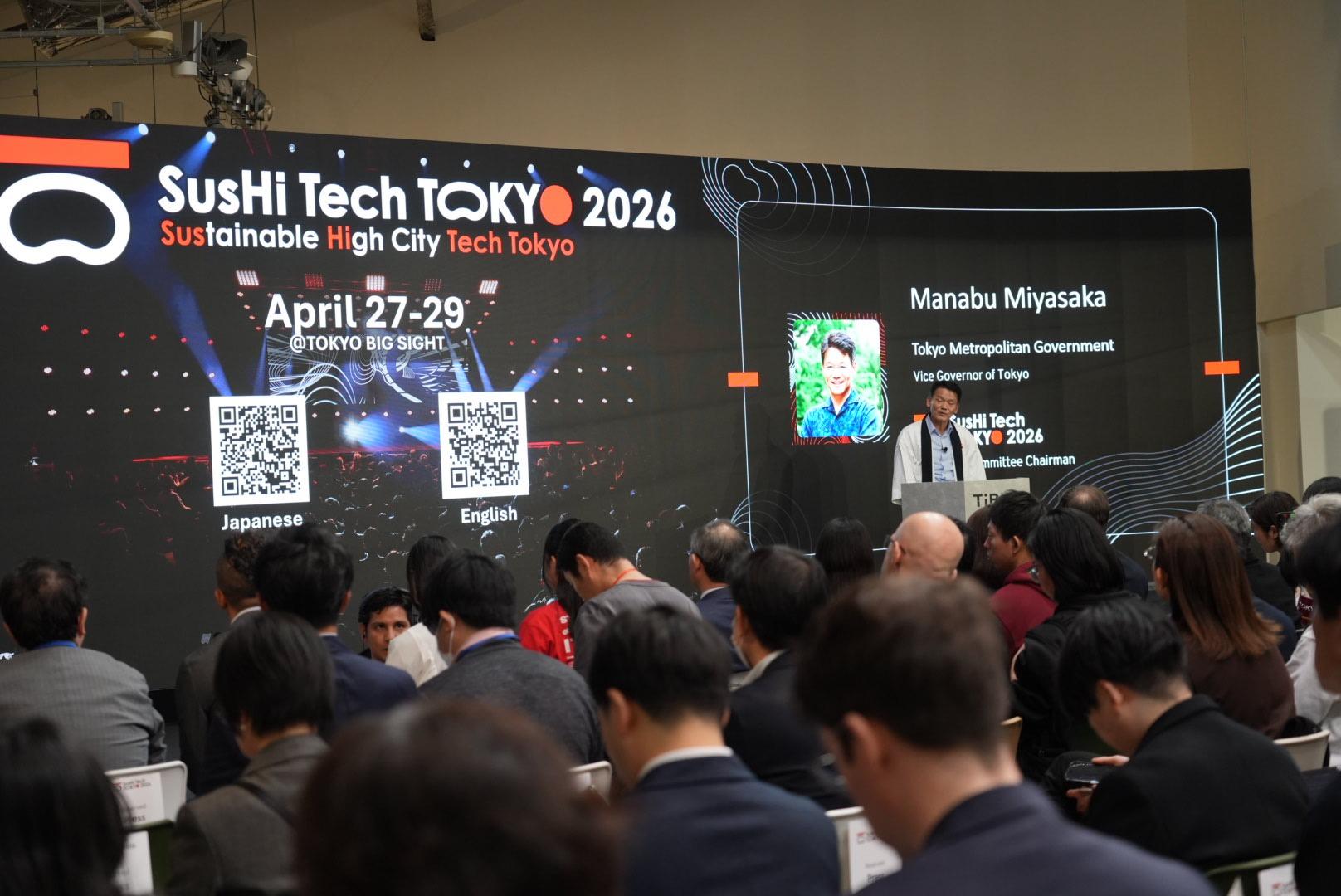
On April 27–29, Tokyo will host its fourth annual SusHi Tech Tokyo, now billed as Asia’s largest innovation conference. International speakers include VPs from Nvidia and Naver, alongside investors from firms such as Isomer Capital, Alumni Ventures, Breakthrough Energy, Scrum Ventures and UK-headquartered IQ Capital.
Billboards featuring its white, red and black logo have already gone up across the city. Organisers expect 60k attendees from Japan’s domestic tech ecosystem, as well as visitors from across Asia, the US and Europe.
“It’s easier for foreign startups to come here now, and large events such as SusHi Tech Tokyo are definitely a magnet,” says Ken Varhama, programme manager at San Francisco and Tokyo-based Scrum Ventures.
As one of the world’s most densely populated urban areas – with nearly 37m people living in Greater Tokyo – the city provides a testing ground for solutions aimed at sustainable urban living. SusHi Tech Tokyo was founded with a focus on sustainable cities and this year focuses on four themes: AI, resilience, robotics and entertainment.
International investors eyeing Japan
Simon Hirtzel, general partner at IQ Capital, sees Japan as a natural extension of the firm’s UK and European strategy.
“More than a quarter of the companies in our portfolio are already actively engaged in Japan with customers, sales partners and research collaborators, and it’s an important part of our work to grow that activity,” he says. “We recently joined up with Naoki Kamimaeda as a venture partner to support our programme to increase these links.”
About one third of our most recent cohort was from Europe" — Ken Varhama, programme manager at Scrum Ventures
Japan is home to a number of blue-chip corporates, including Sony, Hitachi, Rakuten and automotive groups such as Toyota, Nissan and Mitsubishi Motors. But it has produced relatively few unicorns compared with the US and Europe. By building closer ties between large corporates and startups and investing in support infrastructure, the Tokyo Metropolitan Government aims to change that, setting a goal of creating 20 unicorns by 2035.
A new wave of accelerator programmes has helped attract more overseas startups, according to Varhama, who runs a number of such schemes through Scrum Studio in Tokyo.
Although Scrum Ventures has close ties to the US, Varhama says he has seen a rise in European startups applying. “About one third of our most recent cohort was from Europe,” he says.
Accessing the ecosystem through accelerator programmes
One of them was UK-based startup Thermulon, which develops materials for EV batteries, manufacturing and construction. Last year, it took part in the Sakura Deeptech Shibuya Accelerator. The programme led to potential partnerships with major Japanese corporates, according to founder and CEO Sam Cryer.
“It was really good. As a non-Japanese company, it can be hard to get inroads into Japan, so it was really useful to have warm connections in the right places with companies actively looking for collaborations,” he says.
"Last year we welcomed participants from 100 countries. This time, in addition to exhibiting city partners, the event will also gather leaders from major cities around the globe" — Manabu Miyasaka, vice governor at the Tokyo Metropolitan Government
One local success story is fusion startup Kyoto Fusioneering. But as chief operating officer Kiyoshi Seko says, the ecosystem has matured significantly since the company was founded in 2018.
“Investment into the country is increasing, both external and domestic capital,” Seko says. “Six years ago it was quite rare to see deeptech startups in Japan. Now everyone is talking about deeptech.”
In November last year, the Tokyo Metropolitan Government published its Global Innovation Strategy 2.0, outlining plans to support startups and scaleups in Tokyo and strengthen links between academia and corporates. According to vice governor Manabu Miyasaka, the strategy is also designed to attract more international investors.
It has a good location, energetic atmosphere and a mix of Japanese and international tech people" — Anders Färdig, founder of Monoscope
“Last year we welcomed participants from 100 countries. This time, in addition to exhibiting city partners, the event will also gather leaders from major cities around the globe,” Miyasaka said. “The gathering of innovation industry leaders in one place will make SusHi Tech Tokyo unlike any other event and will greatly contribute to expanding multilateral cooperation efforts.”
Beyond partnerships with corporates and other organisations, the government has opened the Tokyo Innovation Base: a large, open-plan space where founders can work, host events and connect with the ecosystem — free of charge.
“This is one of the best places I’ve worked from in Tokyo,” says Anders Färdig, founder of Swedish AI leadership startup Monoscope, who has been based in the city for several weeks. “It has a good location, energetic atmosphere and a mix of Japanese and international tech people.”
Save time and avoid the hassle of booking hotels, transfers, and tickets separately.
Network with innovators from around the world and gain insights into Tokyo’s approach to sustainable urban living through a unique guided tour. Reserve your spot now