Employee engagement is not in the best shape. Gallup’s 2025 State of Global Workplace report warns that managers, squeezed between rising executive demands and employee expectations, are increasingly burnt out. If their morale drops, so too does team productivity.
One way companies are tackling this challenge is by bringing teams together in person.
Well-designed retreats give employees a chance to step away from screens, reconnect with colleagues, and recharge their sense of purpose — all of which can reverse burnout and lift engagement.
But not every offsite works, planning one that truly strengthens culture and morale requires careful thought.
The power of IRL company gatherings
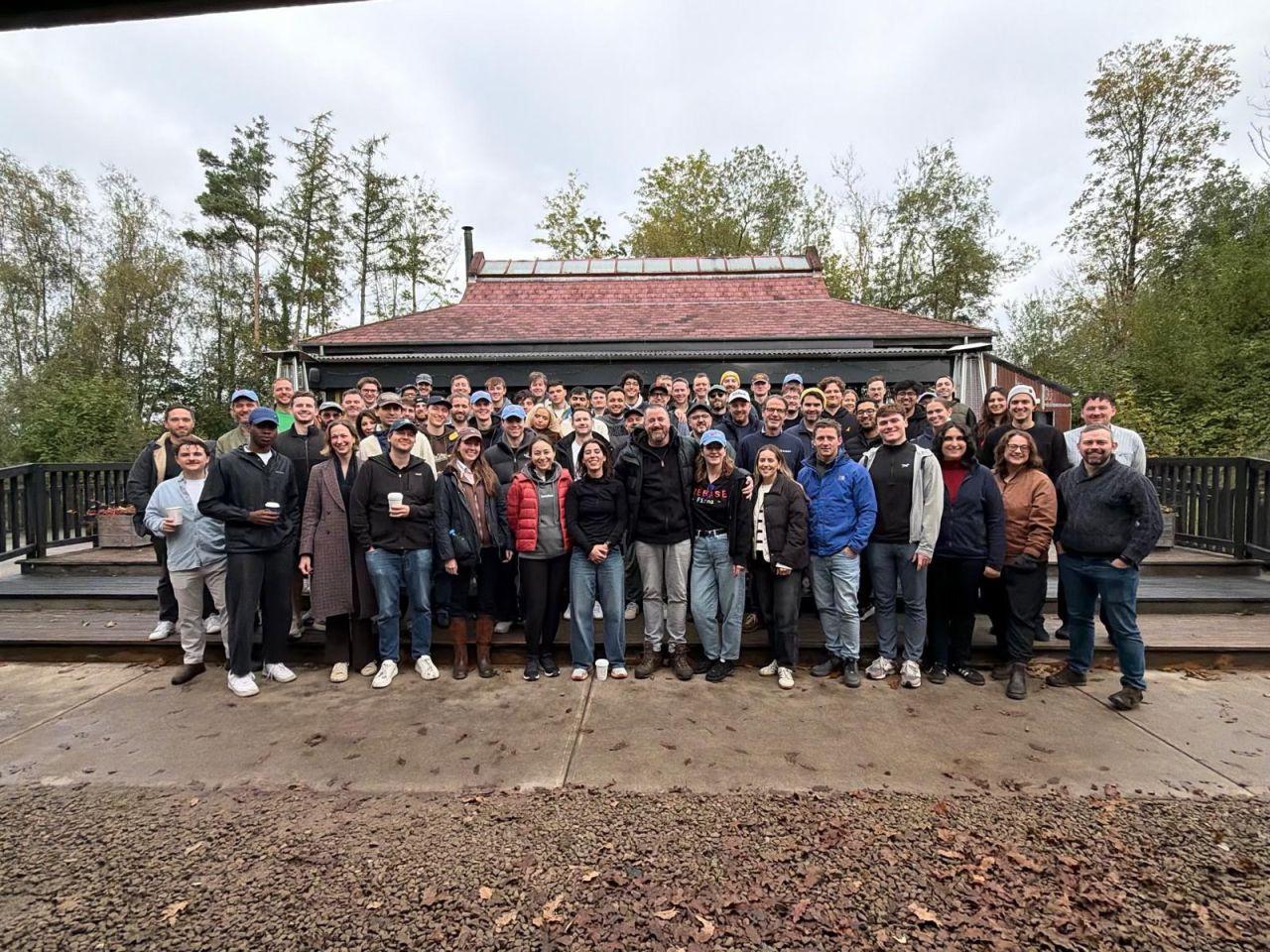
Taking the lead from the startup world, businesses across all sectors and sizes are starting to realise that an offsite is more than just a bit of fun, it can play a significant role in building — or rebuilding — company culture and strengthening vital connections among colleagues who may rarely, or never, see one another, day-to-day other than through a Zoom or Teams screen.
Superficial initiatives may lift spirits temporarily but won’t fix toxic work behaviours, unclear goals or lack of trust.
Johannes Hoyos, CEO of Campfire Company, a full-service in-real-life German Italian corporate retreat firm, says morale is different from short-lived happiness: it’s a sustained emotional climate. It captures the team’s shared attitude, enthusiasm, optimism and confidence, shapes the group’s overall atmosphere, and directly affects productivity, creativity and employee retention.
Hoyos argues remote working has stripped away casual interaction.
“Online meetings tend to focus around tasks with chit chat shelved ‘in the interests of time’,” he says. “Over time this chips away at team spirit, which makes work less enjoyable and meaningful. And that then threatens productivity and retention.”
But offsites can’t be used as a quick fix, they require proper thought.
“We are not talking about a night out and free pizza or an ‘away day’ in a big hall where powerpoint presentations are rolled out and everyone is reminded of the company values… People will smell weak, ill thought through efforts a mile off,” says Hoyos. “Superficial initiatives may lift spirits temporarily but won’t fix toxic work behaviours, unclear goals or lack of trust.”
Location, location, location
Studies show natural environments reduce stress, strengthen connections and boost problem-solving. For example, a study published by the American Heart Association in 2024 found that spending four days in nature improved participants' problem-solving skills by 50%.
These events aren’t just conferences, they’re opportunities to strengthen trust, spark collaboration and celebrate our shared mission.
Jacqueline Malhabour, senior global events manager at Grafana Labs, has run three nature-based retreats with Campfire, in Austrian Alps, German country side towns close to Berlin including the oldest spa resort in Brandenburg.
“We are a remote-first company with employees across 17 countries. Culture and connection has to be at the heart of everything we do,” she says. “These events aren’t just conferences, they’re opportunities to strengthen trust, spark collaboration and celebrate our shared mission.”
Location matters, she adds: “These retreats are strategically organised in ‘remote’ locations to give teams an opportunity to spend time together without the distractions of a big city.”
Budget for activities — but don’t overdo it
Once you have a location, what do you put on the schedule?
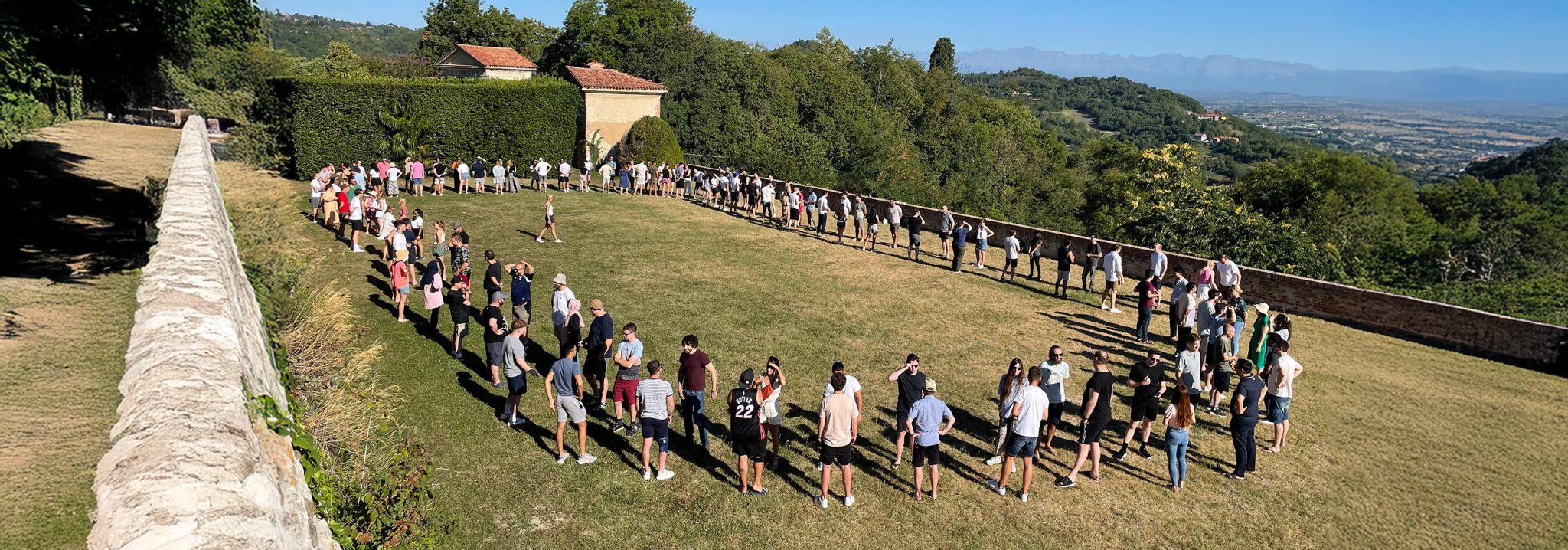
“Some of the best moments have been our offsite team building activities, we've held ice sculpture carving outside a local brewery, raft building on the lake and a maritime decathlon consisting of varied sports that catered to every level of fitness,” says Malhabour. “We've even hosted our own karaoke bar and cinema night that teams still talk about.”
Hoyos says that most people that come on retreats organised by Campfire are knowledge workers and spend most of their time in front of laptops and smartphones. Allowing them to be physical in unusual ways — a walk through a vineyard or yoga at sunrise — creates a good state of mind for high-stakes work, like creating business strategy.
Remote working means people just don’t have the same access to day-to-day social opportunities as before the pandemic and are craving connection.
Elisa Zecchin, Campfire’s head of event management, recalls an event where they put on a dance class for a group of 50 engineers. “We thought people wouldn’t want to participate but they all did and had great fun,” adding that the aim of activities is to break down siloes and hierarchies and put everyone in a frame of mind open to new thoughts and experiences.
But she warns against overscheduling, to allow for colleagues to get to know each other in their own way during unstructured time.
“Remote working means people just don’t have the same access to day-to-day social opportunities as before the pandemic and are craving connection,” she says.
“Unstructured time getting to know colleagues in their own way, overlooking a glacier-made lake or in the shadow of dramatic mountain peaks, is as important to building morale as the scheduled events.”
Set the tone from start to finish
To get ROI from a retreat, Hoyos says, be clear about its purpose and share objectives in advance.
“Set the tone right from the beginning, making logistics as straightforward as possible and then ease everyone into the retreat gently,” he recommends.
To help with this, Hoyos suggests starting the offsite with a shared experience that immediately sets the tone.
These experiences revealed a powerful thing to me: the exponential effect nature can have on achieving the goals of a work offsite or workshop.
“Welcome drinks and a communal meal at the beginning is a simple but effective way to get things started,” he says. “Also, make sure to end the event on a high note with something special. It’s the last thing your colleagues will be exposed to before heading back home.”
For Hoyos, that high note often comes in the form of something simple and human — time spent outdoors, where genuine connection happens naturally.
“These experiences revealed a powerful thing to me: the exponential effect nature can have on achieving the goals of a work offsite or workshop,” he says. “Whether the objective was conflict resolution, a sales kick off or design sprint, if these activities are done in nature, the results are stronger. The participants are more likely to trust each other and remember what they learned.”
He adds that while southern Europe — where Campfire runs most of its events — is an ideal backdrop for this kind of connection, local knowledge makes all the difference.
“We work with about 200 companies, mostly in southern Europe for now — Portugal, Spain, Italy, Germany, Serbia,” Hoyos says. “Don’t underestimate the challenges of organising an offsite in nature. There are cultural and language barriers, and the practical things — is there good wifi? Do you have the right spaces for the work sessions? You can get lost in the operations and then lose sight of other things.”
“Good design for Gen Z workers is specific and will be the difference between an event that leaves good memories and one that doesn’t.”