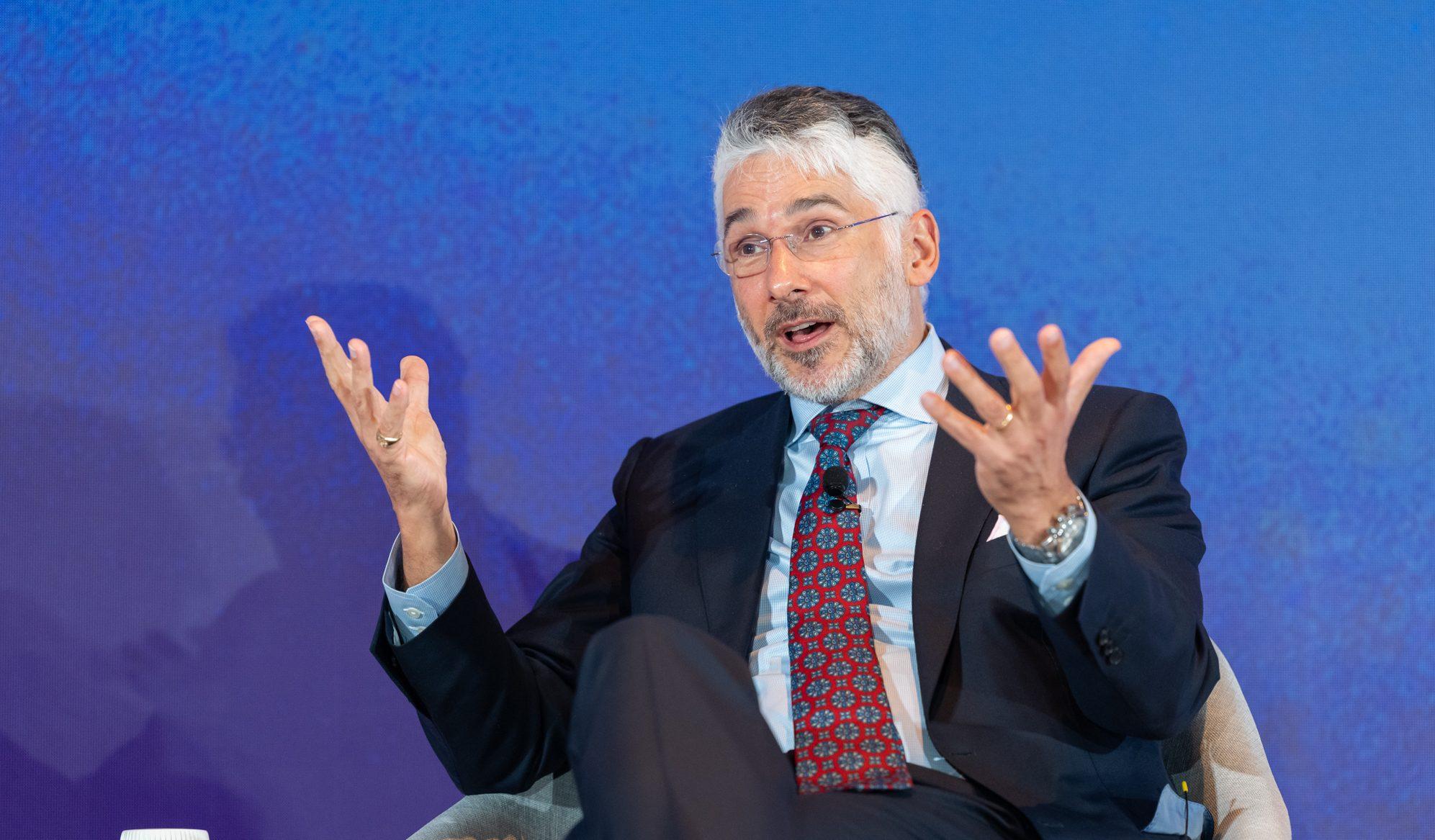

"What is it with audits that they're still so painful for companies, but also for the auditors?,” asks Valentin Neumann, the CEO and cofounder of AI auditing company Cortea, in an interview with Fred Ellis, partner at VC firm N47.
For many businesses, an audit can be a stressful and time-consuming task. But behind the scenes, auditors themselves are also feeling the strain, navigating complex data and heavy workloads.
This strain is now expanding industry-wide. According to the Institute of Chartered Accountants in England and Wales, the total number of practicing auditors and registered audit firms across Europe is dropping.
Over a third (36%) of accountants are also considering leaving the profession in the next five years, including 30% of under 25s, according to data from accounting software company Dext.
As regulatory requirements grow more complex, the remaining professionals are being stretched to their breaking point.
Many audit firms have turned to AI as an antidote to this. But while the technology can make processes faster, using it in a heavily regulated industry such as accounting and finance isn't always simple.
The pain Neumann describes was the inspiration for Cortea, a startup which is trying to solve the problem by building AI that works alongside auditors, instead of replacing them.
“Maintaining a level of quality and service is the first clear goal for AI in this industry. Then it will be about using auditors for much more valuable work,” Neumann adds.
Below, Neumann unpacks how Cortea is using AI to streamline auditing while maintaining the compliance and trust needed within finance.
Designing AI for auditing
When introducing AI into a standardised industry such as IT and finance, the biggest hurdle is often people’s mindset, says Neumann.
“Even though auditors want AI, they don't want to change their processes,” he says.
Cortea avoids forcing users to leave their old ways of working to adopt a new tool, instead trying to reflect environments auditors are already comfortable working in.
Even though we automate audits, we have also built an entire quality management system.
The company relies on the ‘MAYA’ principle — aiming to be the ‘Most advanced, yet acceptable’ solution.
From the auditor's perspective, the platform looks and feels much like the traditional software they already use. When an auditor logs in, rather than manually sifting through data, they’re presented with a fully drafted audit procedure. The auditor then steps in to review the draft, verify the findings, and document their approval.
“We orient ourselves towards the legacy tools they're currently using and copy one of the design concepts because then there's less change,” Neumann tells Ellis.
However, designing an interface this way can be challenging due to the variety of tech tools used and the varying levels of expertise across the industry. Because of that Cortea has found itself serving two different kinds of customers.
These are either more advanced auditors who are already using AI platforms such as Claude to do parts or all of their auditing, or more conservative audit firms who have worked the same way for a long time.
Because Cortea’s underlying AI tool can generate the same results for both groups, the challenge lies in the user experience. Cortea is working to design an interface that serves both types of customers, says Neumann.
"How can we bridge this gap of keeping everything simple like it always has been for auditors versus telling the agent 'start the audit' in an easy chat-based way?” he says.
Trust and quality management
As foundational models become cheaper and more powerful, more specialised software companies face the threat of being overtaken by generalist AI tools.
As long as we still stay adaptable, then we will preserve time.
However, Neumann sees an advantage in the nature of auditing. In a regulated industry where mistakes can result in financial and legal penalties, efficiency can’t come at the expense of accuracy, and general models often lack the specialised workflows, audit trails and transparency required.
“[In auditing] every AI result needs to be reviewable,” he says. “All these things require either adaptations on the AI pipelines or on the user experience [UX].”
By focusing on a specific, tailored UX that auditors trust and recognise, Cortea is building its defence against bigger more generalised AI, Neumann adds.
“Even though we automate audits, we have also built an entire quality management system,” says Neumann. “It's not just the audit automation but it's also about quality control.”
A standard LLM (large language model) might give “black box” results that an auditor can’t verify. Cortea solves this by outlining specific AI instructions for each step of the audit process that the model is forced to rely on rather than its pre-trained data.
"If a regulator comes in and they ask us to show them how our tools are reliable, we can show them the detailed instructions the AI used and the result it came to.”
Even though auditors want AI, they don't want to change their processes.
When developing these kinds of systems, Cortea faced the dilemma of how much a system should do automatically and how much should be left to a human.
“It's actually not an either/or” situation, says Neumann. “The AI is still doing the full work. It delivers a finished audit result but then we always assume it can be wrong. We’re always building on that human review step.”
Future market expansion
As AI continues to free up auditors’ time, Neumann predicts a shift towards more advisory work.
"When you have time to use this resource, you can use it for strategic topics, for consulting,” he says. “You can actually ask, 'How can we become better as a company?' and auditors actually love to work on that.”
As this shift happens, Cortea’s strategy will revolve more around empowering early adopters of AI.
"What happens when those innovators have this power? When they have those abilities to grow without increasing headcount, maybe even while reducing headcount,” he says.
As these firms expand into new markets, Neumann sees a world where they bring Cortea along with them to support their international expansion.
"We already have the first customers in the UK,” Neumann says. We're heavily growing there and we also work with a few auditors in the US.
“But what can happen is that you get too slow, you get too comfortable, you stick to the paradigms of last year. As long as we still stay adaptable, then we will preserve time."