As Europe races to build its AI sovereignty, startups are steadily coming to grips with the massive manufacturing power and market access required to compete at global scale.
Asia is among the most expansive regions capable of servicing both needs. But with political tensions and concerns around intellectual property (IP) protections, expanding there can feel risky.
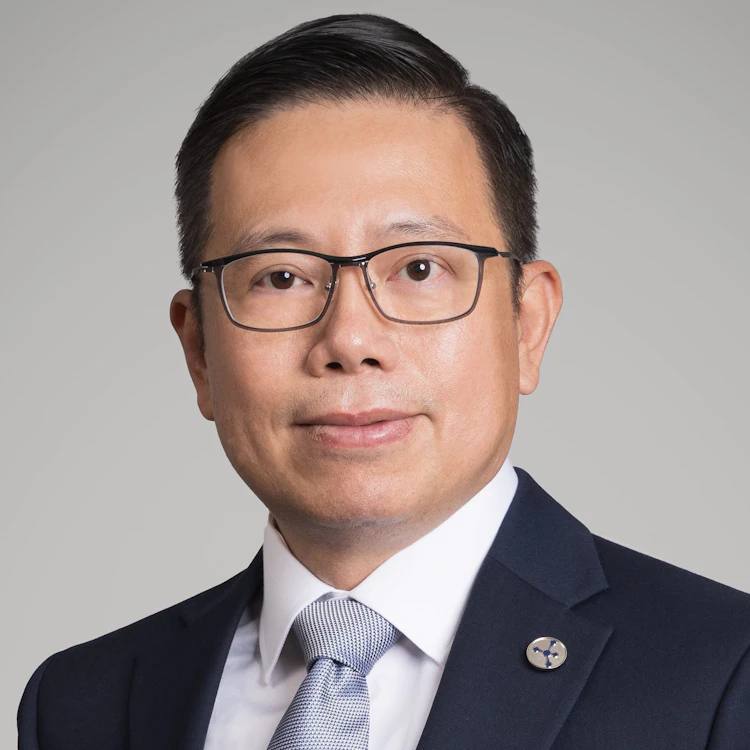
Today, a growing number of European startups are charting a path eastward through Hong Kong, says Terry Wong, CEO of Hong Kong Science and Technology Parks Corporation (HKSTP), the city’s largest ecosystem player driving innovation and technology development across Hong Kong and wider Asia.
Hong Kong's role extends beyond acting as a legal gateway into Asia. The city sits at the intersection of several forces that are increasingly difficult for startups to find in one place: international capital markets, globally connected universities, advanced manufacturing networks and access to one of the world's largest technology markets.
Achieving sovereignty now depends on an entity's ability to access global networks while retaining long-term control over its intellectual property (IP).
The question for European innovators is not whether they should collaborate internationally, but how. Industrial sovereignty requires the opposite of isolation. In practice, it depends on the ability to access global innovation networks and infrastructure while retaining control over IP, governance and vision.
By offering familiarity to the legal framework and proximity to the Chinese booming economy, Hong Kong is becoming a bridge for the exchange between Western and Asian businesses in the language of innovation.
Sifted sat down with Wong to unpack how Hong Kong’s ‘one country, two systems’ legal framework offers advantages for European startups — and how collaboration between global markets is crucial in building AI sovereignty.
Gateway for physical AI
As Europe accelerates its push for AI sovereignty, the divide is no longer between European and Asian innovation, but between ecosystems that are connected and those that are not, Wong tells Sifted.
“In the emerging era of physical AI, the dividing line is no longer between European or Asian innovation, but between ecosystems that are connected and those that are not. Countries that succeed will be those able to combine scientific depth with access to the global market,” he says.
“Achieving sovereignty now depends on an entity's ability to access global networks while retaining long-term control over its intellectual property (IP).”
Asia continues to be one of the fastest-growing regions globally, expected to drive around 60% of global GDP growth, according to the International Monetary Fund.
China, in particular, has placed technology at the forefront of its economic strategy. According to the Information Technology & Innovation Foundation's (ITIF) Hamilton Index, China leads global production in seven out of ten advanced industries including computers and electronics, machinery and equipment, and chemicals.
Hong Kong also sits within the Shenzhen-Hong Kong-Guangzhou cluster, ranked as the world’s top innovation cluster by the World Intellectual Property Organisation.
Countries that succeed will be those able to combine scientific depth with access to the global market.
What makes Hong Kong distinctive within the Greater Bay Area — the collection of powerhouse cities in and around China — is its ability to connect different parts of the innovation value chain. Research institutions, international investors and multinational companies operate alongside proximity to manufacturing, prototyping and supply-chain expertise across southern China.
For startups building AI, robotics or advanced hardware, this can compress the distance between invention and industrial deployment, allowing teams to move more quickly from laboratory breakthroughs to real-world applications.
One emerging area which will drive innovation between Europe and Asia, according to Wong, is physical AI. “Asia and China specifically is fast-emerging as an engine for physical AI with its advancements in semiconductors, microelectronics, industrial robotics and autonomous vehicles,” he says.
“Europe brings world-leading strengths in advanced engineering and industrial systems design.”
This will allow what Wong describes as “co-innovation at scale," allowing technologies to be invented together, and then tested and deployed across other continents.
French institutions and companies are already employing this collaborative model to leverage Hong Kong’s unique ecosystem strengths. Schneider Electric, Veolia, Bouygues-Dragages and Saint-Gobain have partnered with the Hong Kong University of Science and Technology to explore smart manufacturing and energy technologies in a campus-based “living laboratory”. French startup Prophesee, a pioneer in event-based vision sensors for robotics, has also established a Hong Kong innovation centre to deepen regional partnerships.
The French National Research Agency and Hong Kong’s Research Grants Council are jointly funding projects in robotics, microelectronics and advanced materials, while La French Tech Hong Kong–Shenzhen is helping French startups access regional production ecosystems while anchoring strategic R&D and IP under familiar governance. Together, these examples point to selective, disciplined collaboration.
Hong Kong’s ‘one country, two systems’ framework
With dynamic geopolitical tensions, tightening export controls and ongoing concerns around IP protection, there remain clear barriers to direct market entry into Asia.
In this environment, startups increasingly need more than market access alone. They need locations that can connect research, capital, talent and industrial capacity while reducing the operational friction that often accompanies cross-border expansion.
The most effective hubs are those that allow knowledge, technology and investment to circulate between ecosystems without requiring companies to compromise control over their IP, governance structures or long-term strategy.
Trusted interfaces play an important role. Places where collaboration can occur under familiar legal frameworks, where applied research can translate into deployable systems and where the resulting value can be repatriated and scaled in Europe, would also allow ideas, talent and industrial know-how to circulate without undermining national priorities or IP.
Such interface between ecosystems has been Hong Kong’s role, carried for quite some time, positioned between global markets and Asian manufacturing networks, allowing research-led universities to meet with an environment where collaboration can happen under legal frameworks that are similar to those of the UK, the US and other commonwealth nations.
Hong Kong operates under a ‘one country, two systems’ framework. “Under the ‘one country, two systems’ framework, Hong Kong operates in a way that offers familiar common law system and IP and data protection,” says Wong, “providing international companies with an acquainted business environment.
Hong Kong helps companies navigate regulations and manage risk of expansion into the region.
“Companies can leverage Hong Kong to then tap into the Chinese mainland, particularly the Greater Bay Area,” he adds.
This offers advantages especially in the life sciences sector. Clinical data generated in Hong Kong is recognised by the US Food and Drug Administration (FDA), the European Medicines Agency (EMA) and mainland China's National Medical Products Administration (NMPA).
This allows healthtech startups to validate their research in Hong Kong and deploy it across other global markets. Evolving export control and trade policies enacted between the US, the EU and China are also forcing startups to rethink their supply chains in Asia, across areas such as AI, semiconductors and manufacturing.
However, Wong emphasises the current climate is driving a recalibration, rather than a complete retreat from the region. “We are seeing de-risking, not decoupling. Trade and investment flows are being recalibrated along geopolitical lines,” he says.
“With a common law system, Hong Kong helps companies navigate regulations and manage risk of expansion into the region.”
For deeptech, biotech and AI startups, IP is their most valuable asset. According to the World Intellectual Property Organisation (WIPO), Hong Kong ranked 13th globally in 2023 as an IP patent application centre.
Non-residents accounted for roughly 97% of applications, with filings originating from the US, mainland China, Japan, Switzerland and the UK.
How HKSTP catalyses growth
Although legal frameworks and geographic positioning provide a foundation to scaling across Asia, companies require capital, infrastructure and an active ecosystem. Increasingly, startups are leveraging enablers like HKSTP, with its full-service innovation ecosystem and well-developed AI infrastructure, to translate research and ideas into deployable products which can be brought back and scaled in Europe without undermining domestic legal and IP standards.
The Hong Kong government has committed over HK$100bn to support innovation and technology development.
“Over the past 25 years, HKSTP has built a mature innovation ecosystem with strong regional and global networks connecting academic institutions, industry partners, investors and talent. We work to transform capital and innovations into real impact,” says Wong. “We gather 26k tech professionals from more than 26 economies and focus on translating R&D into economic outcomes.”
“Asia presents huge markets, commercialisation and product development potential. We understand successful cross-border collaborations depend on a clear understanding of each side’s value,” he adds.
This will create the space and conditions for startups and strategic industries to go from 1 to 100.
HKSTP offers a 12-month ‘Soft-Landing Programme’ designed for international startups to validate their business models and begin scaling across the Asia-Pacific region before committing massive resources. The programme provides grants, business matchmaking, ecosystem access (such as co-working spaces and specialised training) and market entry support.
HKSTP has also established a Shenzhen Branch acting as a “trusted portal” between Hong Kong and the Greater Bay Area, says Wong.
When looking at the Asian ecosystem over the next decade, Wong emphasises that the goal is no longer just about nurturing early-stage ideas but widespread industrial scaling.
“Our goal is not only to nurture more innovation but also to help them reach the right partnerships and resources to scale into China, Asia and beyond.