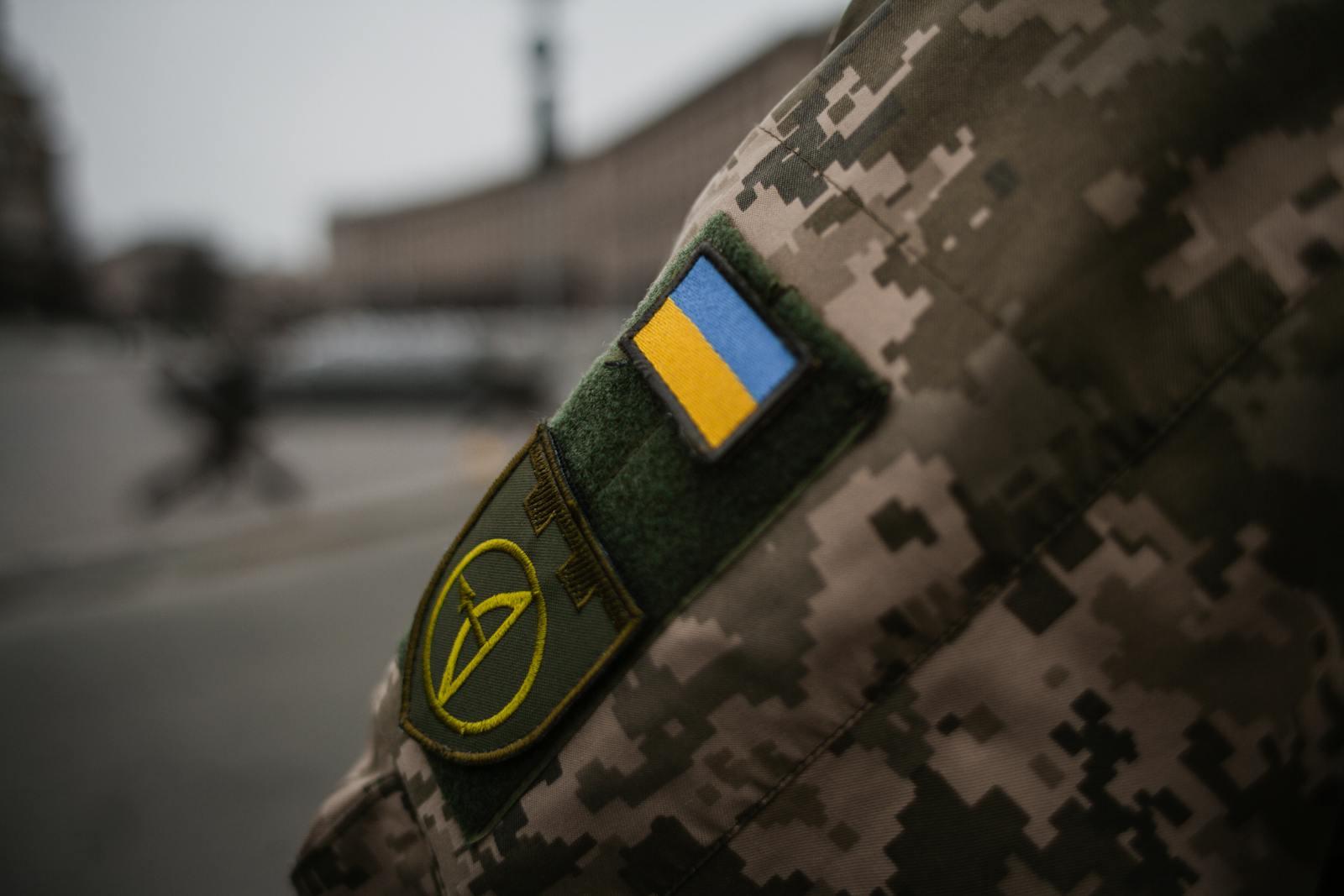
Once overlooked, defence tech is now surging as conflicts, security fears and fresh funding put the sector on the fast track.
“We are witnessing a real disruption in the defence sector with the emergence of new technologies across autonomous systems, AI, cyber, battlefield analytics and space-based surveillance,” says Francois Evers, executive director and responsible for European defence tech investment banking at J.P. Morgan.
This could be the start of expedited growth for the sector.
“The European defence sector overall is exposed to exceptional momentum and expected to grow at a double-digit annual growth rate for the next few years, driven by intensifying geopolitical conflicts and decades of under-investment in Europe,” says Evers.
But what will it really take for Europe’s early defence stars to scale into global leaders?
Responding to global pressures
“Russia's invasion of Ukraine underscored the need for credible European defence capabilities,” says Max Hauer, head of DACH Innovation Economy at J.P. Morgan. “Trump's election, and particularly the Munich Security Conference, really put the EU Member States under pressure to significantly exceed the 2% defence spending targets in the short- to medium term.”
There's also mounting pressure to start focusing efforts on the talent and tech that the continent has in-house.
“Europe wants a shift towards more sovereignty and resilience, meaning that in the future, Europe will rely less on the US defence umbrella,” says Hauer.
Max Wied, chief finance officer and cofounder of Munich-based autonomous unmanned ground systems company Arx Robotics, has seen this shift firsthand.
Both public and private institutions are increasingly mobilising funds, to fund European defense tech companies.
“Since the change in US administration, it has become increasingly clear to European governments that long-term strategic resilience requires both transatlantic independence and stronger intra-European cohesion,” he says. “This realisation has led to greater openness from governments and industry to collaborate with emerging players in the defence space.”
This pressure to ramp up efforts within the continent led to the launch of the European Commission's ReArm Europe scheme — which has since been rebranded to Readiness 2030 — in March 2025, aiming to leverage over €800bn in defence spending.
Hauer says that this scheme marks a welcomed shift in investor attitudes towards the sector.
“Both public and private institutions are increasingly mobilising funds, either on the equity side or on the debt side, to fund European defence tech companies,” he says.
For Jonas Jarosch, chief finance officer of Germany-based AI-powered unmanned vehicles startup Quantum Systems, this financial support has been crucial to the success of his company.
“We became Europe’s first dual-use defence tech unicorn this year, raising a €160m Series C, led by Balderton, to scale production in Germany and expand globally. Private capital enabled us to move faster launching [new] products [and] scaling to the US, Australia, India, the Baltics, Romania and Spain,” he says.
But there is still progress to be made. “We’re still the exception: too many European defence and dual-use startups face investor hesitation, regulatory misunderstandings and even banking barriers. That must change,” he adds.
Maximising potential
Dual-use companies, where products have alternative applications beyond the defence application, are a major focus within defence tech for investors — and Evers says this dual-use approach has become a key success factor.
“Dual-use is at the core of new emerging defence technologies — the benefits [of building] technologies for dual-use are undeniable, such as increasing the total addressable market, driving economies of scale and cost efficiencies as well as ensuring interoperability with other technologies,” he says.
For Jarosch, the opportunity for Europe to excel in this space is ready for the taking.
The question is no longer whether Europe can produce defence tech stars. It already has.
“We’ve shown it’s possible to build a combat-proven, venture-backed dual-use company in Europe and scale it fast. The next step is for investors to see defence tech as essential, not niche, and a financial system built for strategic industries,” he says.
“The question is no longer whether Europe can produce defence tech stars. It already has. The question is whether we can create the conditions for them to lead globally,” he adds.
Wied agrees, adding that governments and ecosystems should make it easier for these companies to grow and realise their potential.
“For European defence tech startups to grow into truly global companies, we need a combination of ambition, capital and an environment that accelerates — rather than slows — innovation,” he says.
“The wider ecosystem — from policymakers to industry partners — should focus on reducing barriers to cross-border collaboration, harmonising standards and supporting dual-use technologies. Ultimately, Europe’s ability to compete globally in defence tech will depend on how quickly we can align funding, talent and regulation to match the speed of innovation.”
Hotspots and beyond
There are hubs in which these attitudes are being adopted — and startups are benefiting from the attention.
“Exposure to the largest and fastest growing defence budgets as well as proximity to university and R&D hubs are typically key factors behind the development of geographic hotspots,” says Evers. “Germany, the UK and France remain today the largest European defence budgets, with Germany clearly growing the fastest, and as a consequence host a large number of European defence tech startups.”
Hauer also identifies Germany as a hotspot.
“[In Germany] we see a lot of promising companies in the defence tech space, which is driven by the increased defence spending and great talent emerging from our universities.
“When you look at Germany a bit closer, Munich is emerging as a centre of excellence of deeptech and hardware enabled tech companies — that includes defence, but also robotics and space companies,” he adds.
Exposure to the largest and fastest growing defence budgets as well as proximity to university and R&D hubs are typically key factors behind the development of geographic hotspots.
And while startups typically have eyes set on bigger markets like the US, Hauer suggests that defence tech has reason to operate differently.
“Generally speaking, I think there is no reason to rush for a European defence startup to enter the US market as quickly as possible,” he says. “While the US defence budget is by far the largest, and entering this market clearly makes a huge difference in terms of revenue and credibility of your business model, I think the ecosystem in Europe, especially in defence tech, is really moving in the right direction, with more and more government funding and private capital flowing into the sector.
“When thinking about a US expansion, it certainly helps to have a strong and proven product in Europe, and then ultimately, from that point on, build the relationships with the decision makers in the US Department of Defense early on.”
Evers agrees — and says that it makes practical sense for startups in the ecosystem right now.
“Expanding outside of Europe requires a clear strategy and is typically most successful when building local presence, either organically or via M&A, and/or establishing partnerships with local players,” he says.
“The latter is a path European defence companies have been opting for increasingly as it limits the capital to be deployed, helps navigate local regulations and facilitates government access.”