Europe has long been a leader in scientific research, with no shortage of renowned research institutions and technical talent.
From the Oxford-Cambridge academic corridor to biotech clusters in Switzerland, France and the Nordics, hotspots across Europe continue to drive innovation.
Capital is also flowing into the life sciences. According to Sifted data, €3.6bn went into European biotech companies in 2025, and €3.4bn has already been raised this year. The drug discovery sector secured €4.3bn in 2025 — and €2.8bn so far this year.
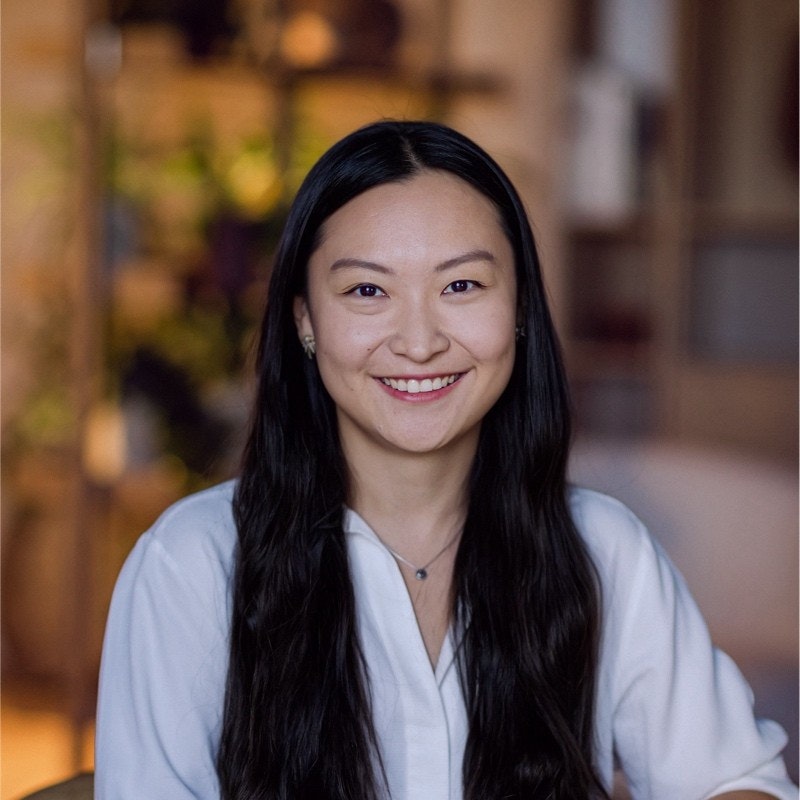
However, Lara Formichella, project lead of life sciences and AI conference bio:cap, believes European researchers, investors and industry leaders are still working in silos.
Breakthrough discoveries emerge in one corner while funding is concentrated in another; industry engagement and support networks are formed too late.
Formichella intends bio:cap to address this issue, bringing together CEOs, founders, investors and researchers who may not all get a chance to meet otherwise. In an interview with Sifted, she shares her hopes for bio:cap to help foster a stronger culture of connectivity within the life sciences ecosystem.
Europe’s life sciences industry
The biggest issue Europe’s life sciences sector faces is fragmentation.
Too often, researchers, founders, investors and policymakers operate in parallel rather than in real collaboration, says Formichella.
“Scientific discoveries happen in one place, strategic industry engagement comes too late and founders often have to build critical networks from scratch,” she says.
Scaling life sciences companies takes far more than early-stage capital, she adds. “Founders need access to experienced investors, strategic partners, talent, international networks and environments where meaningful long-term relationships can develop.”
What we wanted to do differently was to create a setting that encourages interaction much earlier.
Life sciences ecosystems in the US work so effectively because of the density that exists, she says. “Companies there benefit from more unified capital markets, clearer commercialisation pathways and faster scaling environments,” adds Formichella.
In Europe, fragmentation across regulation, reimbursement and market access still creates friction, especially for later-stage growth companies.
The answer isn’t to replicate the US ecosystem entirely, she says, but to create opportunities where conversations and partnerships can happen far earlier in the scaling journey.
Many traditional industry events are built around formal presentations but by the time a founder is pitching to investors, many important conversations have happened too late, Formichella adds.
“What we wanted to do differently was to create a setting that encourages interaction much earlier,” she says, “through curated matchmaking, smaller discussion formats, investor-led conversations and informal spaces that make real exchange easier.”
Collaboration between scientists and investors
For a long time in Europe, there has been a tendency to view academic excellence and commercialisation as separate or even conflicting worlds, says Formichella.
But she is increasingly seeing a different perspective emerge. “Entrepreneurship can be an extension of scientific impact, not a dilution of it. If the ultimate goal is to improve patient outcomes, solve real-world problems or bring breakthrough technologies into practice, then translation matters,” she says.
But visibility plays an important role. When researchers hear from others who have successfully commercialised their research, it can make a huge difference.
Entrepreneurship can be an extension of scientific impact, not a dilution of it.
“That is one reason why we deliberately bring academic institutions together at bio:cap, such as Charité – Universitätsmedizin Berlin, the Berlin Institute of Health in the Charité (BIH) and the Hasso Plattner Institute,” Formichella adds.
The goal is not only to facilitate transactions and conversations but to create the conditions for trust, collaboration and stronger partnerships before formal fundraising even begins.
The success of bio:cap
Success for bio:cap isn’t measured by the event itself but by what happens afterwards.
“If bio:cap helps spark partnerships, investment conversations, collaborations or even companies that would not otherwise have emerged, that would be meaningful,” Formichella says.
If it helps create momentum, strengthen networks and bring together people across science, AI, capital and policy in a more intentional way, that would be very meaningful.
The continent already has strong scientific foundations. The question is how it can be translated into globally competitive ventures.
“This means learning from and connecting with global ecosystems, not thinking in regional silos,” she adds.
While Formichella is aware that bio:cap can’t solve all of Europe’s problems, she remains optimistic. “If it helps create momentum, strengthen networks and bring together people across science, AI, capital and policy in a more intentional way, that would be very meaningful.”