Scaling a startup in Europe has never been more competitive. Funding is flowing, AI is accelerating product cycles — and the race to hire the right people, quickly, has never felt more urgent.
So why are so many founders still running their entire hiring process from a spreadsheet?
It's not laziness or ignorance, but the result of a market that spent decades building tools for the wrong customer.
The software that dominates recruiting was designed for large organisations. Enterprise-grade systems with six-figure implementation costs, months of onboarding and feature sets built for teams of ten recruiters, not a founder who's also running product, sales and investor relations simultaneously.
The entry-level alternatives are not much better: cheaper on paper, but still complex, time-consuming and designed around the assumption that someone in your company has hours to spare managing a hiring pipeline.
Most early-stage founders don't have that person — so they improvise.
Hiring gets managed across spreadsheets, shared documents, email threads and Airtable trackers. CVs get forwarded to a group chat and someone says they will follow up. Interview feedback lives in someone's head. Offer conversations happen over WhatsApp. The process works, until it doesn't, and by then the candidate has already accepted something else.
This is not a niche problem. It's one of the most common and costly operational failures in the European startup ecosystem, and it's hiding in plain sight.
The average early-stage founder spends between 30-40% of their time on hiring during a growth sprint. Most of that time is not spent evaluating great candidates. It's spent on the administrative work that surrounds every hire: writing job descriptions, chasing interview feedback, scheduling calls across time zones, following up on applications that have gone cold and trying to remember where they left the CV they really liked three weeks ago.
That's not a people problem. It's an infrastructure problem.
Some teams have started reaching for AI to fill the gap. Asking Claude, ChatGPT or Gemini to help score CVs, rank candidates or draft screening questions has become a quiet workaround for founders who can't yet afford a recruiter. It's resourceful, but it also carries a regulatory risk that most of them are not yet aware of.
Under the EU AI Act, using AI systems to evaluate, filter, or rank candidates in a hiring context is classified as high-risk. That classification brings with it real obligations: transparency requirements, human oversight protocols, bias auditing and data governance standards that most ad hoc AI setups simply don't meet.
For companies operating in the EU, the compliance clock is already ticking. The fines for non-compliance are not symbolic.
This is the gap that nobody is talking about loudly enough. Founders are being encouraged to move fast and use AI everywhere, while quietly accumulating regulatory exposure in one of the highest-risk areas the EU AI Act covers.
The companies solving this fastest aren't hiring more people. They're changing their infrastructure.
A new category of AI-native hiring tools is emerging, built specifically for founders and hiring teams who need to move quickly without the resources of a large recruiting function, and built with compliance embedded from the start rather than bolted on afterwards.
Rather than replacing the human judgement that great hiring requires, these tools are designed to eliminate the operational weight that gets in the way of it: the scheduling, the follow-ups, the pipeline management, the candidate communications that pile up and slow everything down while your best candidates are fielding three other offers.
Thanks to its innovative proposal, Atlast is part of the global Santander X community. This group consists of the most prominent companies within Banco Santander’s global entrepreneurship initiative, Santander X, which supports entrepreneurs and businesses in growing and transforming their operations. The community offers a comprehensive value proposition that includes training programmes, challenges, awards, benefits, discounts, access to a network of experts, and personalised financial solutions.
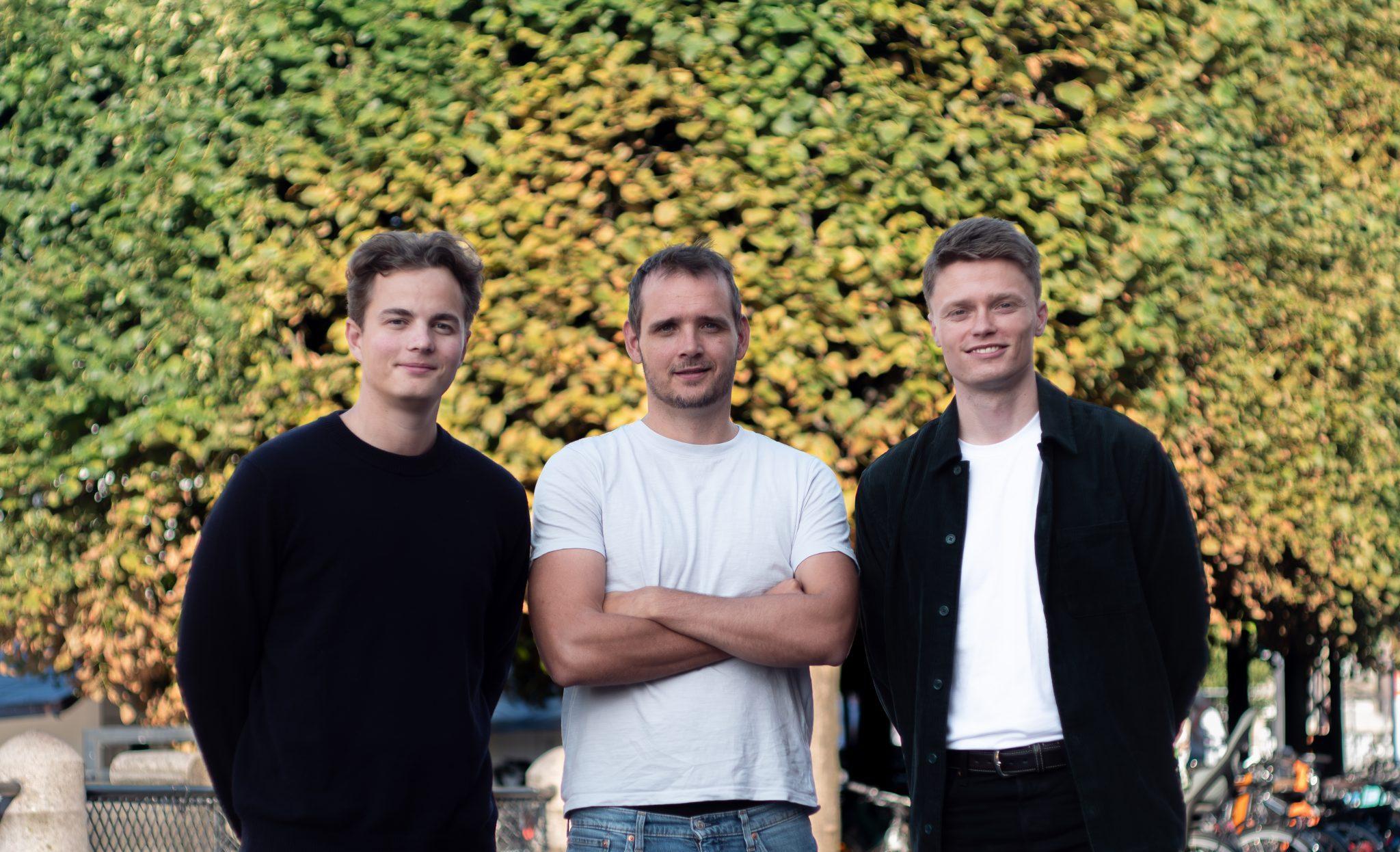
Atlast was built because they've seen both sides of this problem. They bring over four decades of experience: 17 years of talent acquisition and HR from some of Europe's fastest-scaling companies, including Meta, N26 and Glovo, and 25 years of engineering leadership from companies including Skyscanner, Blacklane and Booking.com.
Atlast is your AI talent acquisition team, giving founders and hiring leads the capacity to hire like a company twice their size, without the headcount to match and with the competitive edge of a bigger, better-resourced organisation.
EU AI Act compliance is built in by design, not added as an afterthought. If your hiring process still lives in a shared doc, a group chat or someone's inbox, you're not just losing time. You're losing candidates to competitors who have already made the switch.
Atlast is your AI talent acquisition team. Say who you need to hire and our agents handle the rest, so your people can focus on the decisions that actually matter. Book a free demo and see what hiring without the admin feels like today.