
AI is reshaping the modern workplace, promising increasing gains in productivity, automating workflows and compressing what once took days or weeks into hours. Startups like Mistral and N8n are creating tools faster than ever to accelerate the pace of work and performance.
But as the pace of innovation increases, so does the pressure on the people behind it. The same systems driving speed are also increasing cognitive load, decision fatigue and burnout.
What looks like a productivity boom on the surface is often accompanied by a growing resilience gap underneath. The real opportunity isn’t just faster workflows, it’s better human investment and performance.
That cost is already showing up in absenteeism and rising healthcare spending. But without clear early warning systems, we’re unable to truly understand how to use AI in a way that enables human capacity and performance instead of decreasing it.
A new category of companies is beginning to address that gap. Among them is WONE, a human performance company that works with high-growth teams to turn resilience into a measurable business advantage.
Its platform enables organisations to detect stress earlier, intervene preventively and link human resilience directly to outcomes such as productivity, retention and cost.
At the centre of this approach is Ori, WONE’s AI performance coach. Built on similar AI technologies driving workplace acceleration, Ori is designed to strengthen human capacity rather than deplete it.
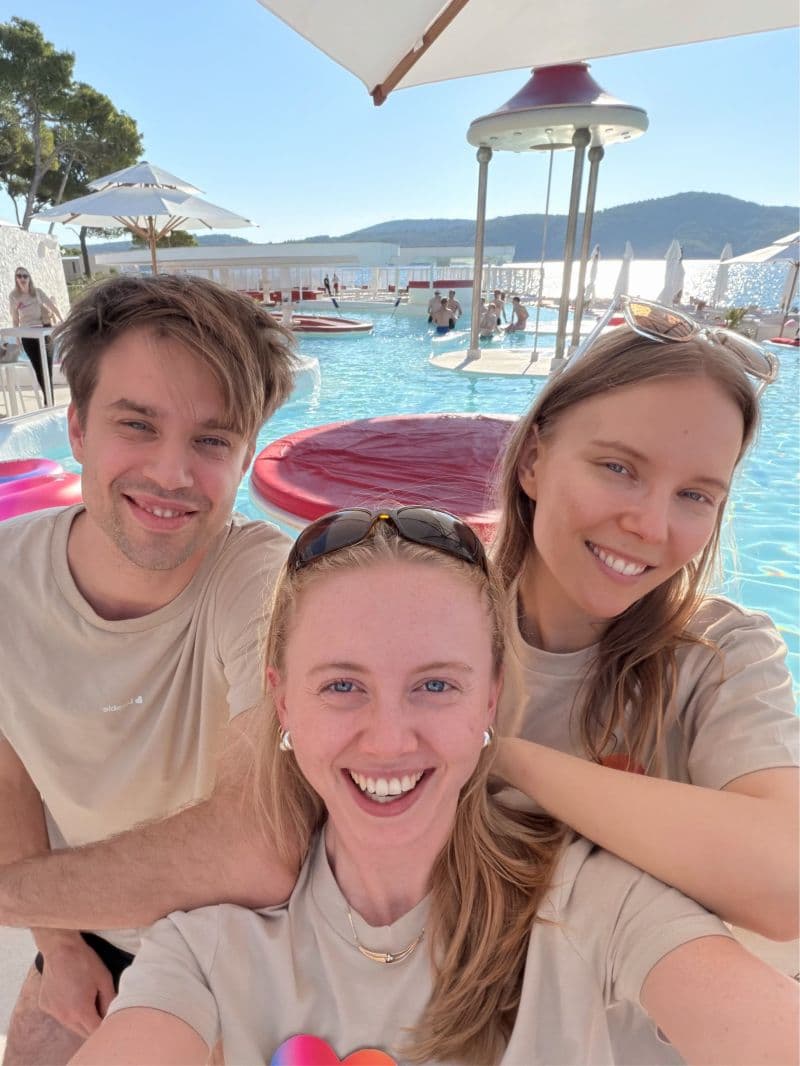
In an interview with Sifted, WONE founder and CEO, Reeva Misra unpacks the core idea behind Ori and how it can help employees and organisations.
AI’s impact on stress and expectations at work
Having worked with AI and healthcare for over a decade, Misra understands the benefits of AI. However, she stresses that to truly see impact, we must use the AI intentionally.
“As AI increases velocity, it also increases stress,” says Misra. “You’re seeing more work, more noise, more decisions but not necessarily more capacity or resilience to deal with those demands.”
Most people push through without recognising the signals their body is giving them.
In AI-driven environments, long working hours and always-on cultures are quietly returning. Teams are expected to operate at a higher intensity, for longer, with less recovery.
“We’re operating in a system that is constantly on,” she says. “There are more inputs, more expectations and very little space to process or recover. Most people push through without recognising the signals their body is giving them.”
This creates a structural blind spot. While organisations track financial and operational metrics in real time, human performance is rarely measured until it deteriorates and appears as burnout, disengagement or churn.
“The old model of pushing until you break has reached its limit,” Misra adds. “But most organisations still don’t have a way to detect when someone is approaching that point.”
From wellbeing to performance infrastructure
A key challenge in workplace health has always been measurement.
WONE’s Index aims to quantify stress resilience across psychological, behavioural and physiological dimensions. This allows organisations to link human performance directly to business outcomes such as productivity, retention and risk.
“It’s not enough to say people feel better,” says Misra. “Leaders need to understand what that means for their business and treat it with the same importance as any other board level matter.”
Rather than approaching stress as a wellbeing issue, WONE frames it as a core business variable, one that can be measured, predicted and optimised.
We’ve moved from a world where stress is reactive and invisible, to one where it can be detected early and acted on.
Ori combines data from WONE’s validated Index with biometric signals from behavioural inputs. It identifies early signs of resilience risk, often before individuals consciously recognise them, and delivers interventions in real time rather than waiting to be asked.
“We’ve moved from a world where stress is reactive and invisible, to one where it can be detected early and acted on,” says Misra.
The shift is subtle but significant. Instead of standalone wellness tools, Ori is designed as infrastructure: embedded into the flow of work, triggered by context, and measured against outcomes that matter to leadership.
“Ori turns stress into something leaders can finally see, understand and act on” she says. “You’re not buying a wellbeing app. You’re investing in performance infrastructure.”
Impact not engagement
“We built Ori based on the data sets of our experts. It draws on WONE's extensive content library, expert-led guidance across sleep, movement, nutrition, nervous system regulation and delivers personalised interventions in real life.”
We’re here to build resilience and not just look at how often people use Ori. That changes the conversation entirely.
Our health journey can feel overwhelming and you often don't know where to start, or whether what you're doing is right,” she adds. “Ori is designed to guide you, then send you back to real life with clarity and a clear next step. It's not designed to extract attention and keep you hooked, it's designed to protect capacity."
Rather than optimising for time spent in-app, WONE measures changes in resilience, recovery and sustained performance.
“Our North Star is impact not engagement driven,” says Misra. “We’re here to build resilience and not just look at how often people use Ori. That changes the conversation entirely.”
The next phase of workplace AI
In the next phase of workplace AI, the competitive question won't be which organisations move fastest. It will be which organisations can sustain that pace, and which ones build the intelligence to know when to shift gears before the cost becomes visible.
For now, most organisations are optimising for efficiency. But as the hidden costs of that optimisation become more visible, the focus is likely to shift.
"We're entering a whole new chapter," she says. "One where organisations can use real-time data to detect performance risk before it materialises, and intervene in ways that genuinely change the trajectory. That's what WONE is built to do, not just help people manage today, but build the resilience to perform at the highest level for the longest time."
Learn how to turn stress into a measurable performance advantage and build resilience at scale here.